How to Buy a Private Island: The Complete Guide
Most guides on buying a private island read like travel magazine fluff — celebrity anecdotes, vague advice to "do your research," and a suggestion to hire a broker. This isn't that.
This guide is for people seriously considering a purchase in the $500K–$5M range who need to understand the legal frameworks, real costs, due diligence requirements, and closing mechanics across different jurisdictions. It's the guide we wish existed when we started researching this market.
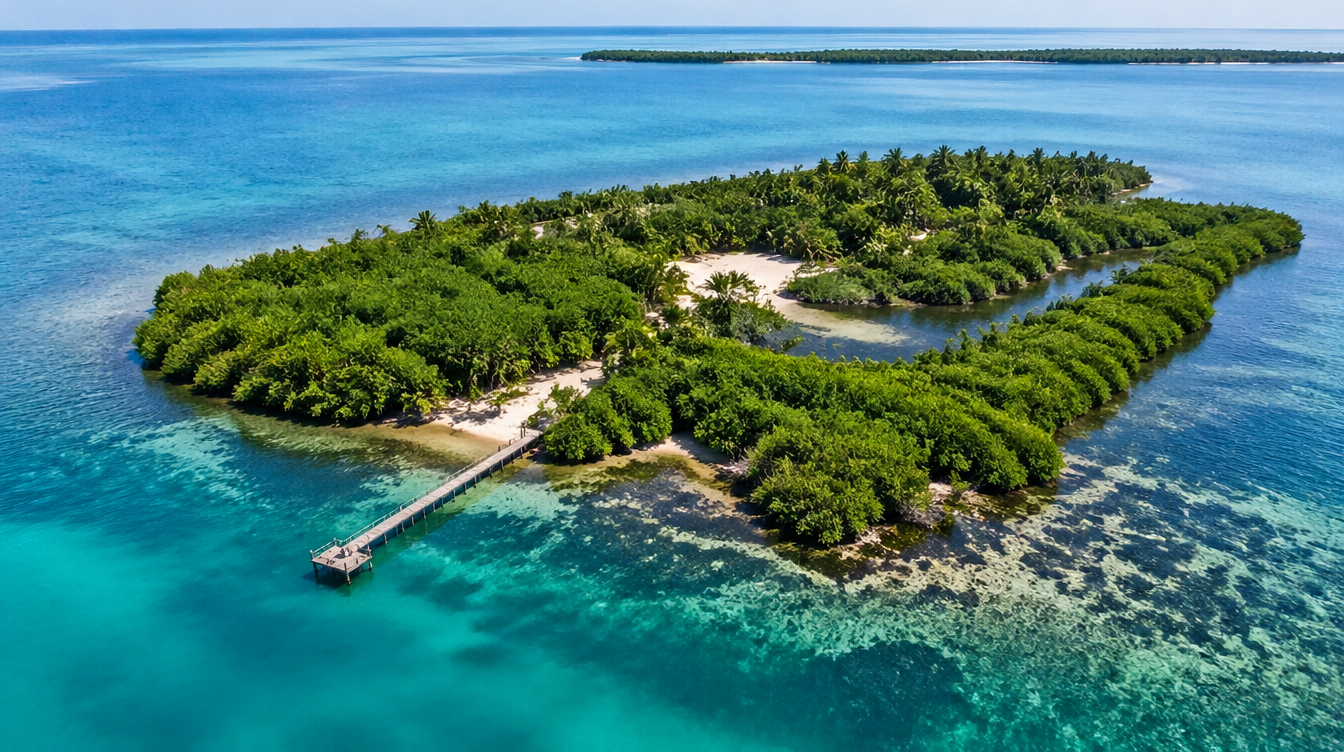 A 35-acre undeveloped island in the Exuma Cays, Bahamas — one of hundreds currently on the market.
What you'll learn
- Where to find islands for sale and how to evaluate listings
- Foreign ownership laws across 20+ countries (with a comparison table)
- How to calculate the true total cost — not just the listing price
- The due diligence checklist that protects you from expensive surprises
- How to finance an island purchase when banks won't touch it
- The closing process, step by step
- What happens after you buy — infrastructure, maintenance, and ongoing costs
Step 1: Decide what you're actually buying
Before you browse a single listing, get clear on what kind of island purchase you're making. This isn't a philosophical exercise — it determines your budget, your legal structure, and which countries you should even consider.
Personal retreat. You want a place to escape to a few times a year. You'll build a modest home, maybe a dock and a guest cottage. Your priorities are privacy, beauty, and accessibility — how easy is it to get there from where you live? Budget: $500K–$3M purchase, plus $500K–$2M in development.
Income property. You plan to build an eco-lodge, vacation rental, or boutique resort. Your priorities are different: guest capacity, transport logistics, permit feasibility, and return on investment. Budget: $1M–$5M purchase, plus $1M–$5M in development. You'll also need a business plan and likely local partners.
Land investment. You're buying undeveloped land with the expectation that it appreciates. Your priorities are clear title, political stability, foreign ownership rights, and long-term development potential. Budget: varies widely, but due diligence costs are the same.
Each of these paths leads to different countries, different ownership structures, and different risk profiles. A Fijian island makes sense for a resort developer who can work within leasehold constraints but would frustrate a buyer who wants outright ownership.
Step 2: Understand what islands actually cost
The median listing price for a private island globally is $2–5 million. But listing prices range from under $100,000 for a small Canadian lake island to over $100 million for a developed Caribbean estate.
Here's what drives the price:
Location is 60% of the price. A 10-acre island in the Bahamas costs 5–10x more than a comparable island in Nova Scotia or Nicaragua. Caribbean and South Pacific islands command premiums because of climate, proximity to airports, and brand recognition.
Accessibility is 20%. An island 15 minutes by boat from a commercial airport is worth dramatically more than one that requires a charter flight plus a 2-hour boat ride. Buyers consistently underestimate how much accessibility affects both purchase price and ongoing livability.
Development status is 15%. A turn-key island with a functioning home, dock, solar system, and desalination plant sells for 1.5–3x more than equivalent undeveloped land. The premium reflects the real cost and difficulty of building on an island — which most buyers underestimate.
Acreage is 5%. Surprisingly, island size has less impact on price than you'd expect. A well-located 3-acre island often costs more than a remote 30-acre island. What matters is usable land (not swamp or rock), beach quality, and elevation.
Price ranges by region
| Region | Entry price | Median price | High end |
|---|---|---|---|
| Caribbean (Bahamas, Belize, Honduras) | $380,000 | $2.5M | $60M+ |
| South Pacific (Fiji, Vanuatu, Fr. Polynesia) | $500,000 | $3M | $35M+ |
| Europe (Greece, Croatia, Scotland, Sweden) | €99,000 | €1.8M | €15M+ |
| North America (Canada, US) | $100,000 | $1.2M | $25M+ |
| Central America (Panama, Nicaragua) | $250,000 | $1.5M | $10M+ |
| Southeast Asia (Philippines, Indonesia) | $250,000 | $1.8M | $20M+ |
| South America (Brazil, Chile) | $350,000 | $2M | $12M+ |
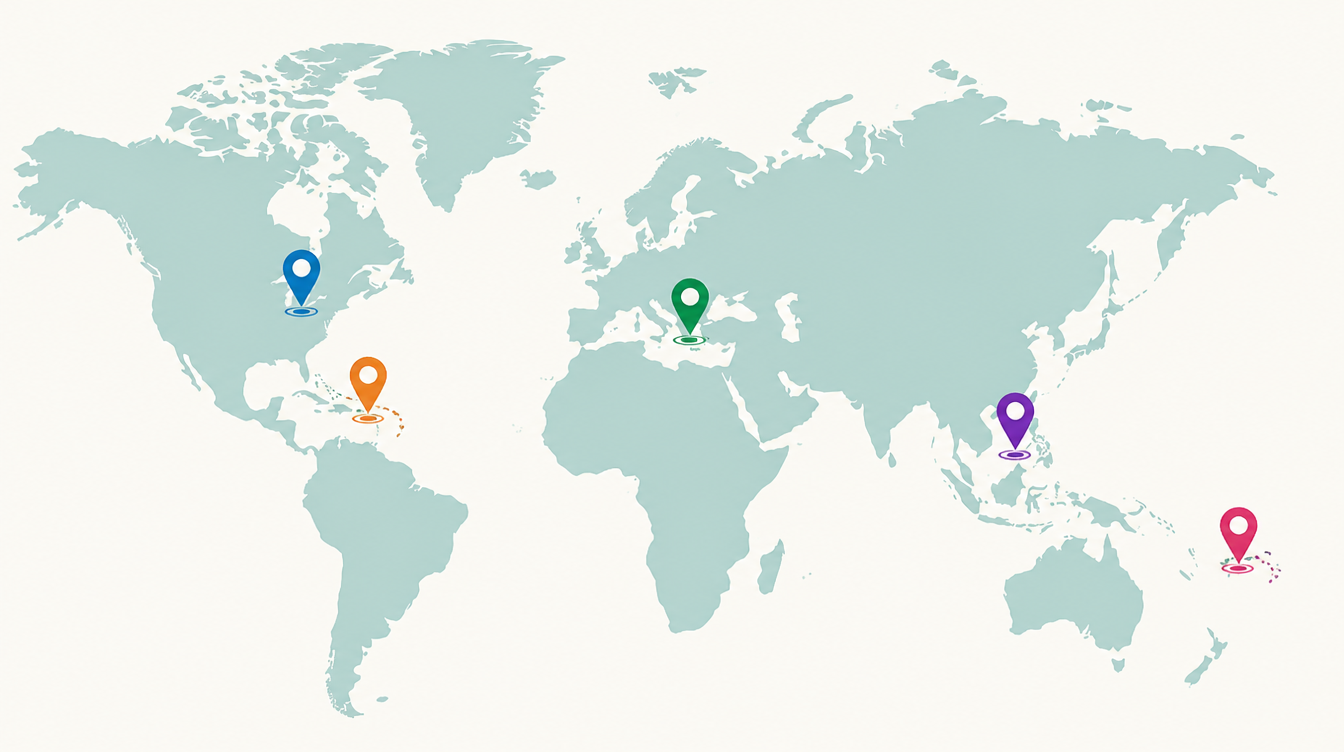 Median private island listing prices by region. Caribbean and South Pacific command the highest premiums.
The cheapest private islands on the market are typically in Canada (Nova Scotia, Ontario), Scandinavia (Finland, Sweden), and Central America (Nicaragua, Belize). The most expensive are in the Bahamas, the Florida Keys, and French Polynesia.
The 1.8x rule
Here's the number that changes every buyer's calculation: the listing price is typically only 40–60% of the true total cost.
A $2.4M island in the Bahamas will actually cost approximately $4.2M by the time you've paid stamp duty, legal fees, permits, and built basic infrastructure (solar, desalination, dock, a modest home, septic system). We call this the 1.8x rule — expect your total spend to be roughly 1.8 times the listing price for an undeveloped island.
For a developed island with existing infrastructure, the multiplier drops to 1.1–1.3x (closing costs and immediate repairs only).
Use our cost calculator to model the true total cost for any island, adjusted by region and infrastructure needs.
Step 3: Know where foreigners can — and can't — buy
This is where most generic guides fail completely. Foreign ownership laws vary enormously by country, and getting this wrong can void your entire purchase.
Countries where foreigners can buy freehold
These countries allow non-citizens to own island land outright, with varying permit requirements:
| Country | Permit needed | Permit fee | Stamp duty | Key restriction |
|---|---|---|---|---|
| Bahamas | Yes — Certificate of Registration | $1,000 | 10% over $100K | Investment Board approval required |
| Belize | No | — | 5% | No restrictions; same rights as citizens |
| Canada | No (most provinces) | — | 0.5–3% varies | Some provinces have foreign buyer taxes |
| Croatia | Yes — reciprocity required | €100–300 | 3% | EU nationals: unrestricted. Others: case by case |
| Greece | Yes — tax registration (AFM) | €500–1,000 | 3.09% | Border zone islands may have military restrictions |
| Panama | No | — | 2% | Same property rights as citizens |
| Scotland | No | — | 5% LBTT | No restrictions on foreign ownership |
| United States | No | — | Varies by state | No federal restrictions |
 Foreign buyers in the Bahamas must obtain a Certificate of Registration — a process that typically takes 30–60 days.
Countries where foreigners are restricted to leasehold
These countries do not allow foreign freehold ownership of land. You can lease for long terms (typically 50–99 years), but you never own the land itself:
| Country | Max lease term | Typical structure | Key consideration |
|---|---|---|---|
| Fiji | 99 years | Crown lease or iTaukei lease | Consent of Minister of Lands required |
| Indonesia | 80 years (25+renewal) | Hak Pakai (right to use) | Must use Indonesian-registered company |
| Philippines | 50 + 25 years | Lease agreement | Foreigners cannot own land at all |
| Thailand | 30 + 30 years | Land lease via Thai company | Complex corporate structures common |
| Vanuatu | 75 years | Crown lease | Requires negotiation with local chiefs |
Leasehold is not automatically worse than freehold. Many successful island developments in Fiji and Indonesia operate on long-term leases. But you need to understand what you're buying: a time-limited right to use the land, not permanent ownership. This affects resale value, financing options, and your heirs' ability to inherit.
For detailed legal requirements in each country, use our jurisdiction checker or read the country-specific buying guides.
Step 4: Find islands for sale
The private island market is fragmented. There's no MLS (Multiple Listing Service) like residential real estate, so listings are scattered across multiple platforms.
Where to search:
The major listing platforms include Private Islands Online (the largest inventory, ~750 active listings), Vladi Private Islands (German-based, 3,000+ lifetime sales, strongest in Canada and Europe), JamesEdition (luxury marketplace, ~100 island listings), and smaller directories like Island Seeker and FindIslands.
Sotheby's International Realty and Christie's occasionally list high-end islands through their luxury property divisions. These tend to be $10M+ properties.
For islands under $2M, you'll often find the best selection through local real estate agents in the specific region you're targeting. A broker in Exuma or a realtor in Nova Scotia will have access to listings that never make it to the international platforms.
What to look for in a listing:
Most island listings are thin on useful information. A photo gallery and a price don't tell you enough. Before requesting more details, try to determine:
- Ownership type (freehold or leasehold?)
- Whether the island has been surveyed
- Whether there's an existing title search or chain of title
- Development status and existing infrastructure
- Environmental designations or protected area status nearby
- How the listing broker was engaged (exclusive listing or open?)
The best listings include a recent survey, a title report, and photos from the current year. Be wary of listings with old photos, no survey, or vague descriptions of acreage — these are red flags that the seller may not have clear title or may be misrepresenting the property.
Step 5: Conduct due diligence
This is where island buying diverges most from conventional real estate. Due diligence on a private island spans legal, environmental, structural, and logistical domains — and in many jurisdictions, there's no standardized process.
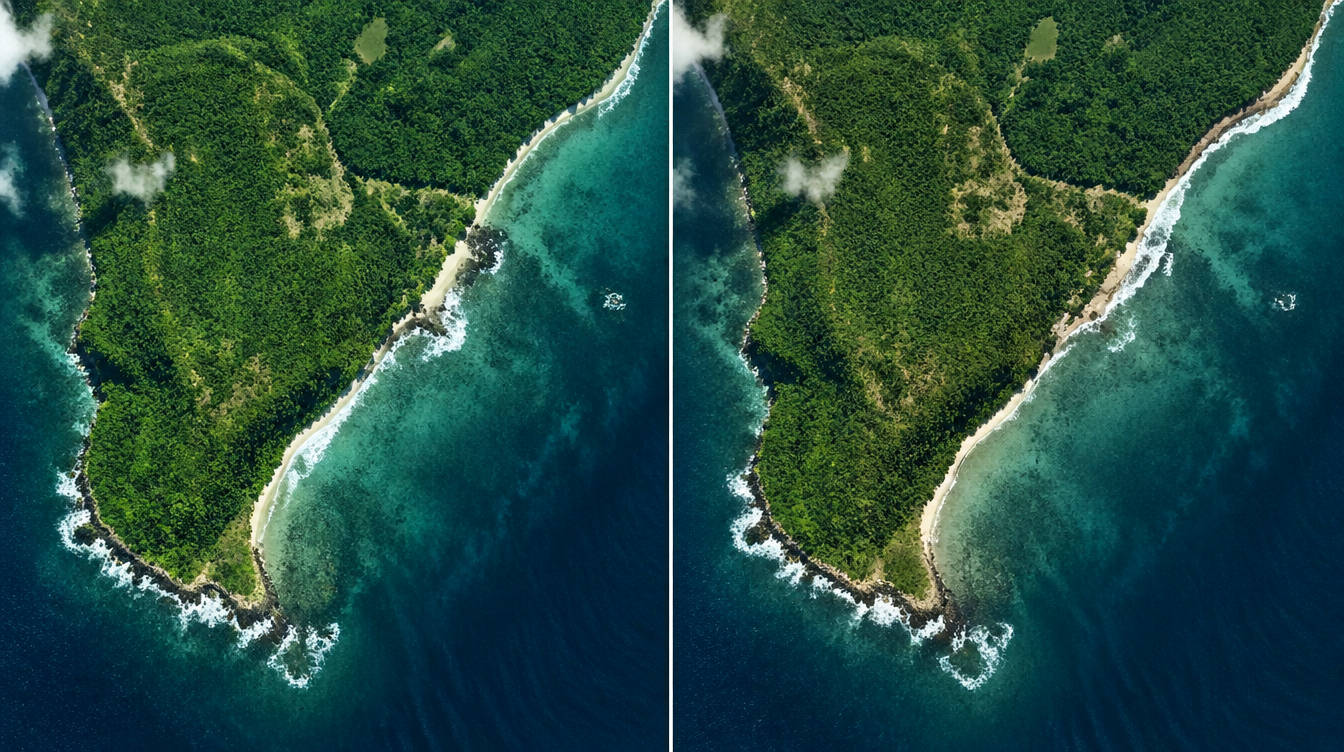 Sentinel-2 satellite imagery reveals coastline changes over time — critical for assessing erosion risk before purchase.
Title verification
This is the most critical step. In some countries (parts of the Bahamas, many Pacific islands), title records are incomplete, disputed, or maintained only in paper form at a local registry office. Cases exist of the same island being sold to multiple buyers by different parties, each claiming ownership.
You need a local attorney — not your home-country attorney, not an international firm's "island desk" — to conduct a title search in the relevant land registry. They need to verify the chain of ownership back as far as records go, check for liens, easements, and encumbrances, and confirm that the seller has the legal right to sell.
In the Bahamas, this means accessing the Deeds and Documents Registry at the Registrar General's Department. In Greece, it means searching the Hellenic Cadastre. Each country has its own system, and the quality of records varies enormously.
Budget $5,000–$25,000 for title verification and legal review, depending on the jurisdiction and complexity.
Environmental assessment
Before purchasing, you need to understand:
- Protected area status. Is the island within or adjacent to a marine protected area, national park, or wildlife reserve? This can restrict or prohibit development entirely.
- Coral reef proximity. Building docks and seawalls near coral reefs may require environmental impact assessments or be prohibited.
- Endangered species. Some islands host nesting sites for protected turtles, seabirds, or other wildlife. Development restrictions may apply.
- Flood and storm risk. What is the peak elevation? What is the hurricane or cyclone exposure? Has the island flooded in recorded history?
- Erosion patterns. Is the island gaining or losing land? Satellite imagery over time can reveal coastline changes.
Budget $3,000–$15,000 for an environmental assessment, depending on scope.
Physical inspection
You must visit the island. Photos lie — sometimes literally (wide-angle lenses, high-tide vs. low-tide shots, seasonal vegetation differences). During your visit, evaluate:
- Beach quality and usable shoreline
- Interior terrain (flat, rocky, swampy, steep?)
- Existing structures and their condition
- Fresh water sources (wells, rainwater, springs)
- Soil quality for construction foundations and septic systems
- Anchoring and docking conditions for boats
- Cellular and internet connectivity
- Noise from nearby islands, boat traffic, or airports
Infrastructure feasibility
For undeveloped islands, you need to assess whether the infrastructure you'll need is even feasible:
- Power. Can you install solar? What's the sun exposure? Is there a submarine cable option from the mainland?
- Water. Is there freshwater? If not, can you install a desalination plant? Where will it sit? What's the seawater quality?
- Waste. What kind of septic system is feasible given the soil type and water table?
- Dock. What's the water depth at the shoreline? Is there a natural harbour or protected anchorage? What's the seabed composition?
- Construction access. How will building materials get to the island? Is there a barge landing area?
Budget $2,000–$10,000 for a professional infrastructure feasibility study.
Step 6: Negotiate and structure the deal
Pricing reality
There's no comparable sales database for islands. Sellers often price based on what they paid plus what they've spent, which may have little relation to current market value. Buyers have almost no data to evaluate whether a price is fair.
What you can do:
- Research listing history — has this island been listed before? At what price? For how long? Islands that have been on the market for years may have significant room for negotiation.
- Check the listing price per acre against regional averages.
- Compare the asking price to the cost of buying a similar undeveloped parcel plus building the existing infrastructure from scratch.
- Ask the broker for any recent comparable sales in the area (they may not share, but it's worth asking).
Deposit and offer structure
Most island purchases follow this structure:
- Letter of Intent (LOI) or Offer to Purchase. A non-binding expression of interest at a specific price, with conditions.
- Due diligence period. Typically 60–120 days, during which you conduct title search, environmental review, and inspections. The deal is contingent on satisfactory results.
- Deposit. Usually 10% of the purchase price, held in escrow. In some jurisdictions, the deposit is non-refundable after the due diligence period.
- Closing. Transfer of title, payment of balance, recording of deed.
Legal structure
Depending on the jurisdiction and your tax situation, you may want to purchase through:
- Personal name. Simplest, but exposes you to personal liability and may have tax implications.
- LLC or corporation. Provides liability protection and potentially tax advantages. Required in some jurisdictions (Indonesia requires a PT PMA company for foreign ownership).
- Trust. Common for estate planning purposes, especially for high-value islands.
Consult a tax advisor in both the island's jurisdiction and your home country before deciding on a structure.
Step 7: Finance the purchase
Here's the hard truth: traditional mortgages are almost never available for private island purchases. Banks consider islands too illiquid, too difficult to appraise, and too costly to repossess.
How island purchases are actually financed
Cash. The majority of island transactions are all-cash. This is the reality for most of the market.
Seller financing. Some sellers will finance a portion of the purchase price — typically 50–70% — at a negotiated interest rate over 5–15 years. This is more common for islands that have been on the market for a long time and for sellers who are motivated. Always have an attorney review seller financing terms.
Private banking. If you have an existing relationship with a private bank and significant assets under management, some will lend against your broader portfolio (not the island itself) to fund the purchase. This is not an island mortgage — it's a secured line of credit.
Partnership or co-ownership. Increasingly common: two or more buyers purchase together, splitting the cost and usage. This requires a carefully drafted operating agreement covering usage schedules, maintenance responsibilities, improvement decisions, and buyout provisions.
Home equity. Some buyers use equity in their primary residence to fund an island purchase through a HELOC or cash-out refinance. This works but puts your primary home at risk.
Step 8: Close the transaction
Closing an island purchase typically takes 60–120 days from accepted offer, but can take longer in jurisdictions with slow bureaucratic processes.
Closing checklist
- Title search completed and clear
- Environmental assessment completed with no deal-breaking issues
- Foreign ownership permits obtained (if required)
- Legal structure established (LLC, trust, etc.)
- Funds verified and in escrow
- Stamp duty and transfer taxes calculated
- Conveyance documents prepared by local attorney
- Survey confirmed and boundaries agreed
- Insurance arranged (property + liability)
- Deed recorded at local registry
Closing costs by region
| Cost | Caribbean | Europe | North America | South Pacific |
|---|---|---|---|---|
| Legal fees | 1–3% | 1–2% | 0.5–1.5% | 1–3% |
| Stamp duty / transfer tax | 2.5–12% | 3–10% | 0.5–3% | 1–6% |
| Registration fees | $500–2,000 | €500–3,000 | $200–1,500 | $500–2,000 |
| Survey (if needed) | $3,000–10,000 | €2,000–8,000 | $2,000–8,000 | $3,000–12,000 |
| Foreign buyer permit | $500–5,000 | €500–3,000 | Usually none | $500–2,500 |
| Total closing costs | 5–15% | 5–12% | 2–6% | 4–10% |
Step 9: Plan for what comes after
Buying the island is the beginning, not the end. For undeveloped islands, the development phase is where most of your money and time will go.
Infrastructure costs (undeveloped island)
| System | Typical cost range | Notes |
|---|---|---|
| Solar power (10–20 kW) | $50,000–$120,000 | Includes batteries and inverter |
| Desalination plant | $200,000–$850,000 | Size depends on household/resort needs |
| Dock construction | $150,000–$650,000 | Heavily dependent on seabed and exposure |
| Septic / wastewater | $50,000–$180,000 | Advanced treatment required near reefs |
| Primary residence | $200,000–$800,000+ | 1.5–3x mainland construction costs |
| Roads / paths | $20,000–$100,000 | Depends on terrain and island size |
| Communications | $5,000–$30,000 | Satellite internet + cellular booster |
| Total | $675,000–$2,730,000 |
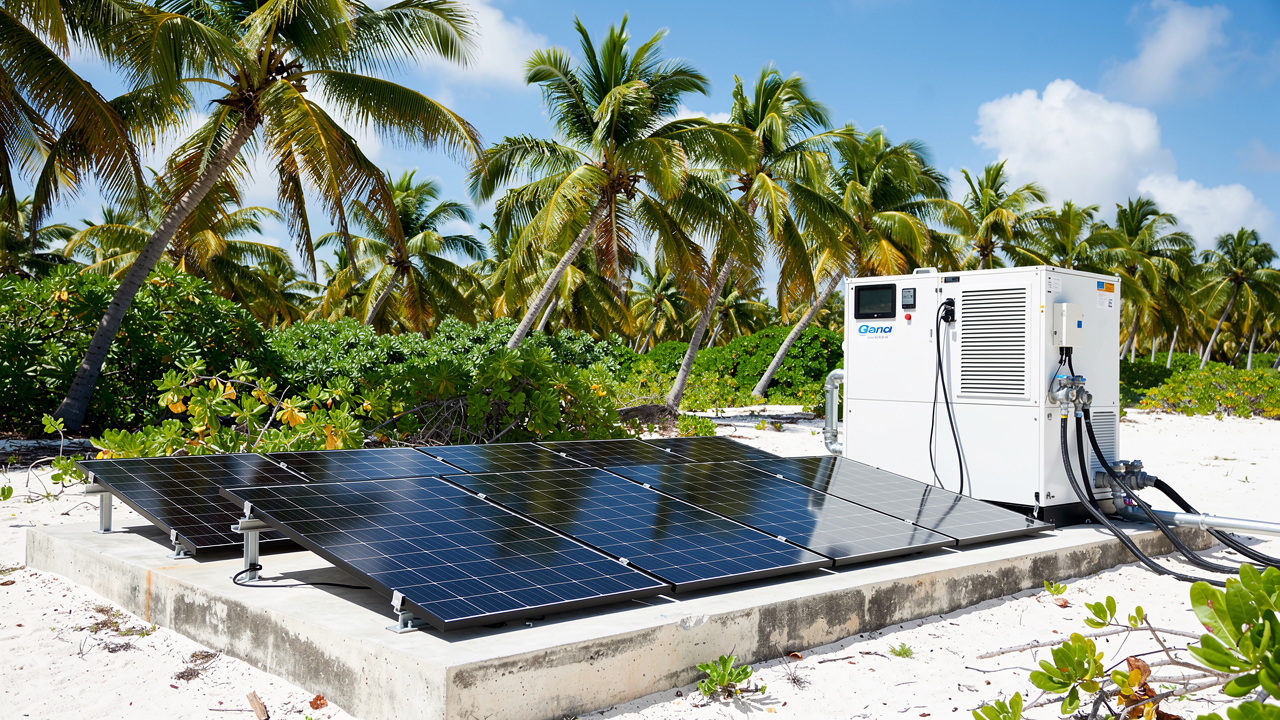 A typical off-grid island power and water setup: 15kW solar array with battery storage and a reverse osmosis desalination unit.
Construction costs on islands typically run 1.5–3x mainland prices due to material transport, labor logistics, weather delays, and permitting complexity.
Annual operating costs
| Cost | Typical range |
|---|---|
| Property tax | $5,000–$50,000/year (varies by jurisdiction) |
| Insurance | $10,000–$50,000/year |
| Maintenance | $30,000–$100,000/year |
| Caretaker / staff | $24,000–$60,000/year |
| Transport (fuel, boat maintenance) | $10,000–$30,000/year |
| Utilities (generator fuel, system maintenance) | $5,000–$20,000/year |
| Total annual | $84,000–$310,000/year |
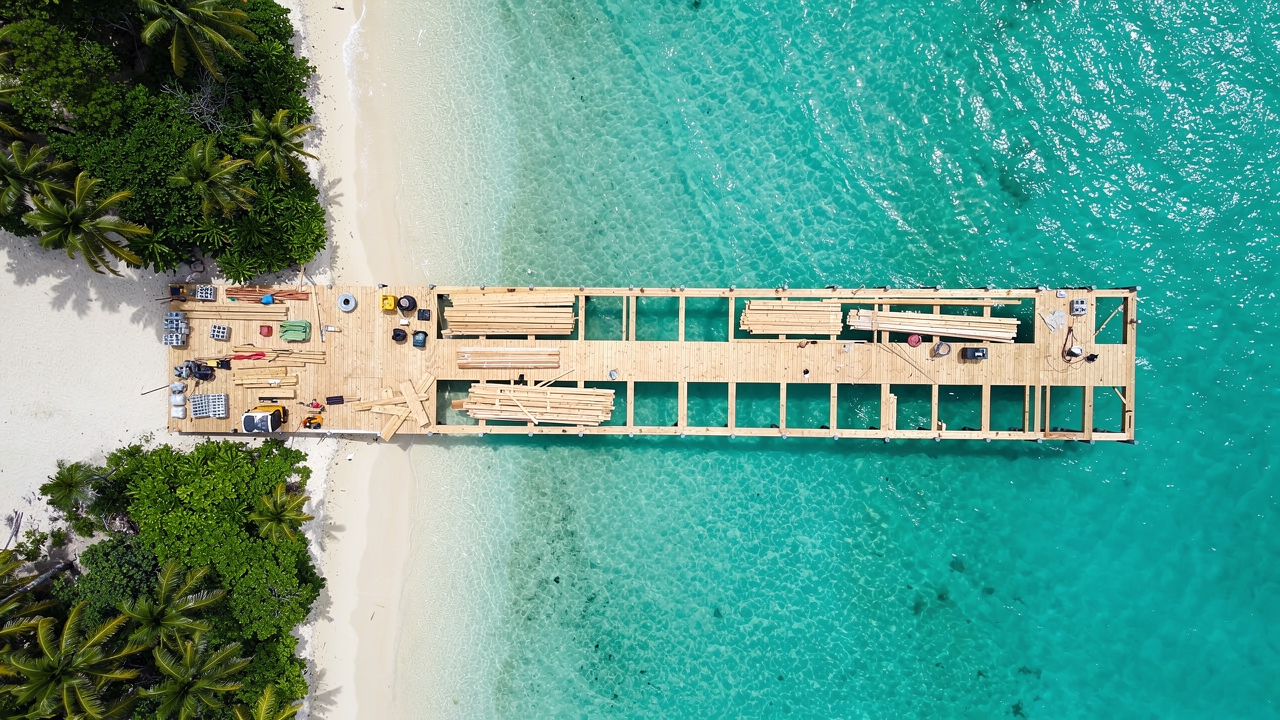 Dock construction on a Belizean caye. Marine construction costs $150K–$650K depending on conditions and design.
The due diligence checklist
Use this as a working document during your evaluation:
Legal
- Title search completed by local attorney
- Chain of ownership verified
- No liens, easements, or encumbrances
- Foreign ownership permits researched / obtained
- Tax obligations in island jurisdiction understood
- Tax implications in home country understood
- Legal purchase structure decided (personal / LLC / trust)
- Local zoning and building regulations reviewed
Environmental
- Protected area status checked
- Coral reef and marine habitat assessed
- Endangered species survey (if required)
- Flood history and storm surge risk evaluated
- Peak elevation measured
- Coastline erosion / accretion assessed (historical satellite imagery)
- Water table depth tested
Physical
- Island visited in person
- Beach quality and shoreline assessed
- Interior terrain evaluated
- Existing structures inspected (if any)
- Fresh water sources identified
- Soil tested for construction and septic feasibility
- Docking and anchorage conditions assessed
- Cell and internet connectivity tested
- Nearest hospital, airport, and marina identified with distances
Financial
- Total cost modeled (purchase + closing + infrastructure + contingency)
- Annual operating costs estimated
- Financing secured or cash confirmed
- Insurance quotes obtained
- Currency exchange strategy planned (if foreign purchase)
Infrastructure feasibility
- Solar exposure assessed for power system
- Desalination feasibility confirmed (seawater quality, placement)
- Septic system type determined based on soil and water table
- Dock location and construction method identified
- Material delivery method planned (barge access, landing area)
- Construction contractor identified with island experience
Common mistakes that cost buyers $100K+
Skipping the title search. In jurisdictions with poor land records, buyers have purchased islands only to discover competing claims to ownership. A $10K title search can save you from a $2M loss.
Underestimating infrastructure costs. The 1.8x rule exists because buyers consistently budget for the island but not for making it livable. Desalination alone can cost $300K+. Add solar, a dock, and a modest home and you've doubled the purchase price.
Ignoring accessibility. An island that's beautiful but requires a 3-hour boat ride from the nearest airport will be visited less than you think. Accessibility directly affects both enjoyment and resale value.
Not understanding leasehold vs. freehold. Buying a 50-year lease is fundamentally different from buying freehold land. Both can be good investments, but they require different financial analysis and exit strategies.
Relying on the listing broker for due diligence. The listing broker represents the seller, not you. Hire your own attorney, your own surveyor, and your own environmental consultant.
Forgetting about ongoing costs. An island doesn't maintain itself. Tropical weather, saltwater corrosion, and vegetation growth mean constant maintenance. Budget $80K–$300K per year in operating costs, depending on the property.
Frequently asked questions
Can you really buy a private island? Yes. There are roughly 600–700 private islands on the open market at any given time. Prices range from under $100,000 for small Canadian lake islands to over $100 million for developed Caribbean estates. The median listing price is $2–5 million.
Do you need to be rich to buy a private island? You need significantly less than most people assume. Islands in Nova Scotia, Finland, and Belize start under $250,000 — less than a house in most US cities. The real expense is making an undeveloped island livable, which typically costs 0.8x the purchase price on top.
Can you do whatever you want on a private island? No. Private islands remain under the jurisdiction of the country they're in. You must follow local building codes, environmental regulations, zoning laws, and tax obligations. You're buying real estate, not sovereignty.
How long does it take to buy a private island? Typically 60–120 days from accepted offer to closing. The due diligence period (title search, environmental review, permits) takes 60–90 days. Some jurisdictions with slow bureaucracy can take 6+ months.
Can you get a mortgage for a private island? Traditional mortgages are almost never available. Most island purchases are cash deals. Some sellers offer financing (50–70% at negotiated terms). Private banking clients may borrow against their existing portfolio. Partnerships and co-ownership are increasingly common.
Start your search
The best way to evaluate private islands is to compare real data — not just photos and prices. Every island listing on Island Atlas includes satellite imagery, climate risk scoring, accessibility ratings, jurisdiction guides, and estimated total cost of ownership.
Use our cost calculator to model the true total cost of any island before you make an offer.
Have questions about a specific jurisdiction? Check our country-by-country buying guides for detailed legal and tax information.