How Much Does a Private Island Cost?
A private island can cost anywhere from $50,000 to over $100 million. That's not a useful answer.
Here's a better one: the median listing price for a private island globally is $2–5 million, there are roughly 600–700 islands on the open market at any given time, and the listing price represents only 40–60% of what you'll actually spend. The rest goes to closing costs, legal fees, permits, infrastructure, and construction.
This guide breaks down what islands actually cost — by region, by development status, and by the category most guides ignore: everything after the purchase.
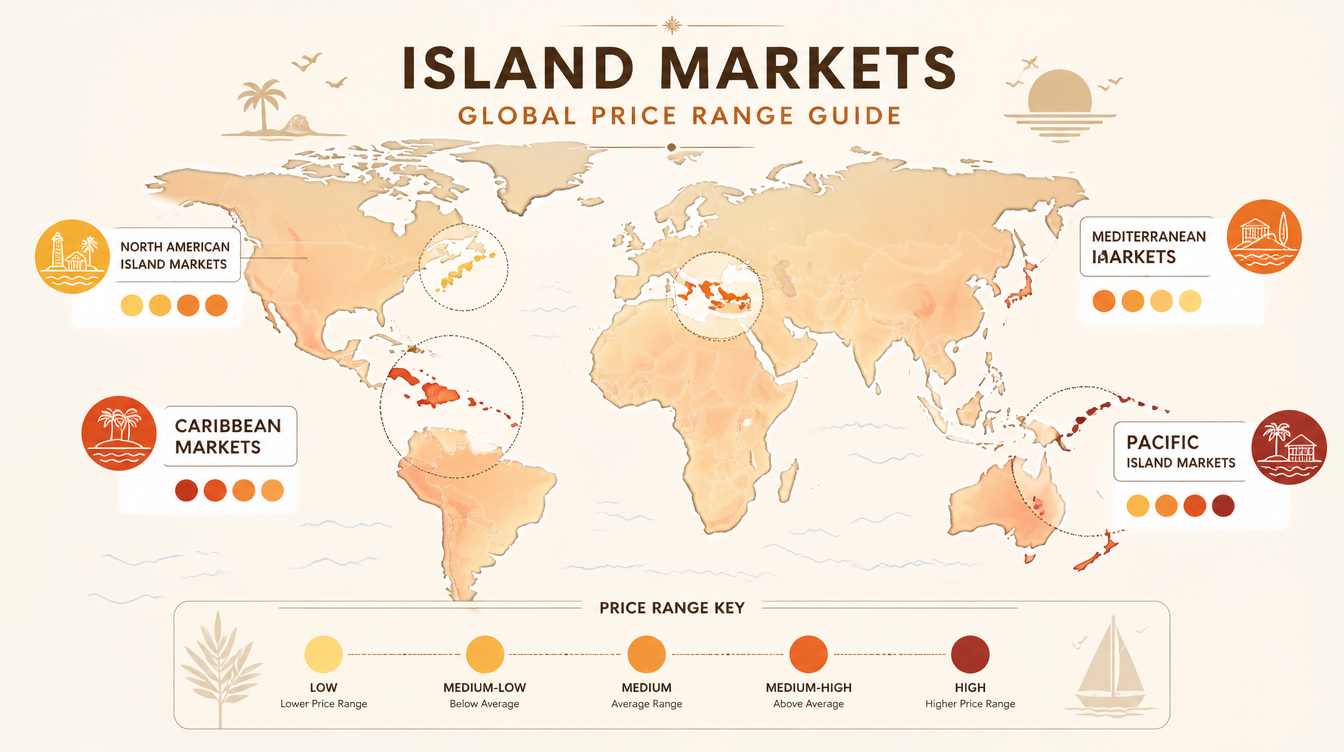 Median listing prices by region. Caribbean and South Pacific command the highest premiums, while Canada and Scandinavia offer the lowest entry points.
Purchase prices by region
Island prices are driven primarily by location (60%), accessibility (20%), development status (15%), and acreage (5%). A 10-acre island in the Bahamas costs 5–10x more than a comparable island in Nova Scotia — not because the land is better, but because of climate, proximity to airports, and brand recognition.
Caribbean
The Caribbean accounts for over 40% of all private island listings globally. The Bahamas alone has hundreds of islands and cays, many privately owned.
| Country | Entry price | Median | High end | Typical ownership |
|---|---|---|---|---|
| Bahamas | $380,000 | $2.8M | $60M+ | Freehold |
| Belize | $225,000 | $1.2M | $8M | Freehold |
| Honduras (Bay Islands) | $400,000 | $1.5M | $12M | Freehold |
| Nicaragua | $250,000 | $900K | $5M | Freehold |
| Grenada | $1M | $5M | $100M | Freehold |
| British Virgin Islands | $2M | $8M | $30M+ | Freehold/Crown lease |
The cheapest Caribbean islands are in Belize and Nicaragua — small, undeveloped cays on the Turneffe Atoll or off the Corn Islands, starting around $225K. The most expensive are large, developed estates in the Bahamas (Exuma, Abaco) and the BVI.
North America
| Country/Region | Entry price | Median | High end | Typical ownership |
|---|---|---|---|---|
| Canada — Nova Scotia | $60,000 | $350K | $3M | Freehold |
| Canada — Ontario | $100,000 | $500K | $4M | Freehold |
| Canada — British Columbia | $400,000 | $1.5M | $8M | Freehold |
| USA — Maine | $200,000 | $800K | $10M | Freehold |
| USA — Florida Keys | $1M | $5M | $95M | Freehold |
| USA — Michigan/Wisconsin | $80,000 | $300K | $2M | Freehold |
Canada is consistently the most affordable entry point into island ownership. Nova Scotia lake and coastal islands regularly list under $100K. The tradeoff is obvious: cold winters, seasonal access, and no palm trees. Florida Keys islands are the most expensive in North America, with Pumpkin Key selling for $95 million.
Europe
| Country | Entry price | Median | High end | Typical ownership |
|---|---|---|---|---|
| Greece | €200,000 | €1.8M | €20M+ | Freehold |
| Croatia | €350,000 | €1.5M | €8M | Freehold (EU nationals) |
| Finland | €50,000 | €250K | €2M | Freehold |
| Sweden | €80,000 | €400K | €3M | Freehold |
| Scotland | £150,000 | £500K | £5M | Freehold |
| Ireland | €200,000 | €500K | €4M | Freehold |
| Italy | €500,000 | €2M | €15M+ | Freehold |
Finland and Sweden offer the cheapest European islands — archipelago islands with existing cabins for under €100K. Greece and Croatia command premiums for Mediterranean climate and tourism potential.
South Pacific
| Country | Entry price | Median | High end | Typical ownership |
|---|---|---|---|---|
| Fiji | $500,000 | $3M | $35M | Leasehold (99yr) |
| French Polynesia | $250,000 | $2.5M | $30M+ | Freehold (with permit) |
| Vanuatu | $300,000 | $1.5M | $10M | Crown lease (75yr) |
| Tonga | $200,000 | $800K | $3M | Leasehold |
South Pacific islands are often leasehold rather than freehold, meaning you lease the land for 50–99 years rather than owning it outright. This affects both price and long-term value. Read our guide on freehold vs. leasehold ownership to understand the implications.
Southeast Asia
| Country | Entry price | Median | High end | Typical ownership |
|---|---|---|---|---|
| Philippines | $200,000 | $1.5M | $15M | Leasehold only |
| Indonesia | $300,000 | $2M | $25M | Leasehold (Hak Pakai) |
| Thailand | $500,000 | $3M | $20M | Leasehold via Thai company |
Foreigners cannot own land in the Philippines, Indonesia, or Thailand. All island ownership is structured through leases or corporate vehicles. Prices per acre are among the highest globally because of demand from hotel developers.
South America
| Country | Entry price | Median | High end | Typical ownership |
|---|---|---|---|---|
| Brazil | $350,000 | $2M | $12M | Freehold (with approval) |
| Chile | $300,000 | $1.4M | $8M | Freehold |
| Panama | $150,000 | $900K | $10M | Freehold |
Panama offers the easiest foreign ownership process in the region — same property rights as citizens, no restrictions. Brazil requires government approval for coastal properties.
The 1.8x rule: what islands really cost
Here's the number that changes every buyer's math: the listing price is typically only 40–60% of your total spend.
We analyzed infrastructure costs, closing fees, and development expenses across multiple jurisdictions and consistently found that buyers of undeveloped islands spend approximately 1.8 times the listing price before the island is livable. For a $2M island, expect $3.6M total. For a $500K island, expect $900K.
This multiplier breaks down roughly as follows:
| Cost category | As % of listing price | On a $2M island |
|---|---|---|
| Listing price | 100% | $2,000,000 |
| Closing costs (legal, stamp duty, permits) | 8–15% | $160,000–$300,000 |
| Solar power system (10–20 kW) | 3–6% | $55,000–$120,000 |
| Desalination / water system | 10–15% | $200,000–$320,000 |
| Dock construction | 8–15% | $150,000–$300,000 |
| Primary residence (modest, 1,500–2,500 sqft) | 15–35% | $300,000–$700,000 |
| Septic / wastewater | 3–5% | $55,000–$100,000 |
| Contingency (10% of infrastructure) | 5–8% | $80,000–$150,000 |
| Total | ~152–199% | $3,000,000–$3,990,000 |
For developed islands with existing infrastructure, the multiplier drops to 1.1–1.3x — mostly just closing costs and immediate repairs.
Model your own numbers. Our cost calculator lets you adjust every variable — region, solar size, dock type, building size — and shows the total in real time.
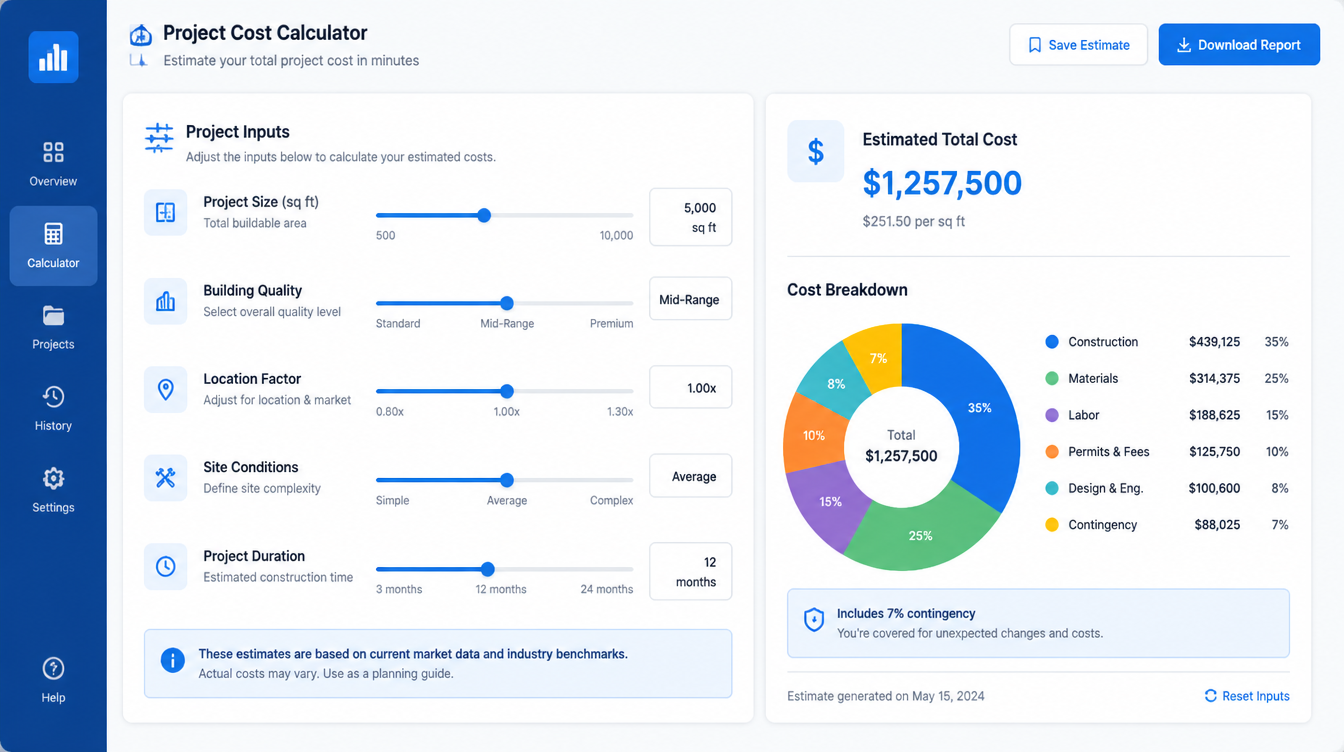 The Island Atlas cost calculator models true total cost across six regions, with adjustable infrastructure options.
What affects the price per acre
Price per acre varies wildly — from under $1,000 in remote Canada to over $300,000 in Southeast Asia. But per-acre price alone is misleading. A 2-acre island with a deep-water harbour and proximity to an airport is worth far more than a 50-acre island with rocky shores and no anchorage.
The factors that actually drive value:
Water depth at the shoreline. Deep water (6+ feet) close to shore means boats can approach directly. Shallow water means expensive dredging or a long dock. This single factor can swing value by 20–30%.
Protected harbour or anchorage. An island with a natural leeward harbour is substantially more valuable than one exposed to open ocean on all sides. In the Caribbean, this is often the difference between a $1M island and a $3M island.
Distance to a commercial airport. Under 30 minutes by boat from a commercial airport is the sweet spot. Every additional hour of travel reduces both usability and resale value.
Beach quality. Soft sand beaches command premiums over rocky shores, mangrove coastlines, or coral rubble. Buyers routinely pay 50% more for an island with swimmable beaches on multiple sides.
Elevation. Higher islands are more resilient to storm surge and sea level rise. An island with a peak elevation of 30+ feet is dramatically safer than one that maxes out at 6 feet. In an era of increasing climate awareness, elevation is becoming a real pricing factor.
Development restrictions. Some islands sit within or adjacent to marine protected areas, national parks, or cultural heritage zones. These restrictions can reduce buildable area or prohibit certain types of construction entirely — affecting both value and resale.
Closing costs by country
Closing costs are the first hidden expense buyers encounter. They vary significantly by jurisdiction.
| Country | Stamp duty / transfer tax | Legal fees | Foreign buyer permit | Registration | Total closing |
|---|---|---|---|---|---|
| Bahamas | 10% (over $100K) | 1–2.5% | $1,000 | $500 | 12–15% |
| Belize | 5% | 1–2% | None | $500 | 6–8% |
| Canada | 0.5–3% (varies) | 0.5–1.5% | None (usually) | $200–1,000 | 2–5% |
| Greece | 3.09% | 1–2% | €500–1,000 | €500–2,000 | 5–7% |
| Croatia | 3% | 1–2% | €100–300 | €500 | 4–6% |
| Fiji | 3–6% | 1–3% | $500 | $500 | 5–10% |
| Panama | 2% | 1–2% | None | $300 | 3–5% |
| USA | Varies by state | 0.5–1.5% | None | $200–1,000 | 1.5–6% |
The Bahamas has the highest closing costs in the Caribbean due to its 10% stamp duty on property over $100K. Panama and Belize have the lowest. These percentages add up fast on a multi-million dollar purchase — 12% stamp duty on a $3M island is $360,000.
Infrastructure costs: building on an island
If you're buying an undeveloped island, you're building everything from scratch. Island construction costs typically run 1.5–3x mainland prices because materials must be shipped by barge, labor must be transported and housed, weather delays are common, and specialized marine construction (docks, seawalls) is inherently expensive.
Power
Most islands are off-grid. Your options:
| System | Cost range | Best for | Annual maintenance |
|---|---|---|---|
| Solar + battery (10–15 kW) | $55,000–$90,000 | Single residence | $2,000–$5,000/yr |
| Solar + battery (20–50 kW) | $100,000–$250,000 | Small resort / large home | $5,000–$12,000/yr |
| Generator (diesel backup) | $15,000–$40,000 | Supplemental power | $8,000–$20,000/yr (fuel) |
| Submarine cable (from mainland) | $500,000–$3M+ | Near-shore islands only | Minimal |
Solar is now the default for most island installations. Battery technology has made 24/7 solar power viable even in the tropics, where evening power draw was historically a problem. A 15 kW system with lithium battery storage will power a typical 3-bedroom home with AC, kitchen appliances, and water systems.
Water
Fresh water is the single biggest infrastructure challenge on most islands.
| System | Cost range | Capacity | Notes |
|---|---|---|---|
| Rainwater collection | $5,000–$20,000 | 500–5,000 GPD | Climate dependent. Works well in tropics. |
| Reverse osmosis desalination | $200,000–$850,000 | 1,000–10,000 GPD | The standard for islands without freshwater. |
| Well / groundwater | $10,000–$50,000 | Varies | Only possible on larger, elevated islands. |
Desalination is the most common solution but also the most expensive. A small residential unit producing 1,000 gallons per day costs $200K–$350K installed. Larger systems for resorts can exceed $800K. Maintenance runs $5,000–$15,000/year including membrane replacements.
Dock
| Type | Cost range | Notes |
|---|---|---|
| Floating dock | $30,000–$80,000 | Simplest. Works in calm, protected waters. |
| Fixed timber dock | $150,000–$350,000 | Standard for most island homes. |
| Concrete / steel dock | $300,000–$650,000 | Required for larger boats or exposed locations. |
| Full marina dock | $500,000–$1.5M+ | Multiple slips, fuel, power. Resort-level. |
Dock costs depend heavily on water depth, seabed composition (sand vs. rock vs. coral), wave exposure, and length. A dock in a protected harbour with a sandy bottom is half the cost of one on an exposed rocky shore.
Building a home
Island construction costs by region:
| Region | Cost per sqft (basic) | Cost per sqft (mid-range) | Cost per sqft (luxury) |
|---|---|---|---|
| Caribbean | $250–$350 | $350–$550 | $550–$900+ |
| South Pacific | $300–$420 | $420–$600 | $600–$1,000+ |
| North America | $200–$300 | $300–$450 | $450–$800+ |
| Europe (Med.) | $280–$380 | $380–$550 | $550–$900+ |
| Southeast Asia | $150–$250 | $250–$400 | $400–$700+ |
A modest 2,000 sqft island home in the Caribbean costs $500K–$1.1M to build. The same home on the mainland would cost $300K–$500K. The premium comes from barge transport of materials, on-island labor housing, weather delays, and the general difficulty of building somewhere with no roads, no power grid, and no hardware store.
Annual costs of owning an island
This is the section most guides skip entirely. An island doesn't maintain itself, and the ongoing costs surprise many first-time owners.
| Expense | Typical range | Notes |
|---|---|---|
| Property tax | $5,000–$50,000/yr | Varies enormously by jurisdiction. Bahamas: 1% over $500K. Belize: minimal. |
| Insurance | $10,000–$50,000/yr | Hurricane zones are expensive. Some islands are uninsurable. |
| Maintenance / repairs | $30,000–$100,000/yr | Saltwater corrosion, tropical weather, and vegetation growth are constant. |
| Caretaker | $24,000–$60,000/yr | Essential if you're not living there full-time. Security + maintenance. |
| Boat / transport | $10,000–$30,000/yr | Fuel, maintenance, marina fees for your access vessel. |
| Utilities (system maintenance) | $5,000–$20,000/yr | Solar, desalination, generator maintenance and fuel. |
| Total annual | $84,000–$310,000/yr |
The biggest variable is insurance. In the Caribbean hurricane belt, property insurance on an island can run 2–4% of the insured value annually. A $3M property could cost $60K–$120K/year to insure. Some insurers won't cover private islands at all, leaving owners to self-insure.
The second biggest variable is whether you employ a full-time caretaker. If the island isn't occupied, vegetation reclaims structures quickly in the tropics. A caretaker handles maintenance, security, monitors weather damage, and keeps the dock and grounds usable. Budget $24K–$36K/year for a part-time local caretaker, or $48K–$60K for full-time staff.
What you can buy at each price point
Under $100K — a foothold
At this price, you're buying a small lake island in Canada (Nova Scotia, Ontario) or a tiny archipelago island in Finland or Sweden. Expect under 5 acres, seasonal access, no infrastructure, and cold water. These are weekend cabin properties, not tropical escapes. You'll still spend $50K–$150K making it usable (cabin, dock, solar).
$250K–$500K — the entry point
Small tropical cays in Belize or Nicaragua. Undeveloped, 1–3 acres, no infrastructure. Also the range for larger Canadian coastal islands with existing cabins. At this price, you're buying land and a view — everything else is on you. Total cost to livable: $500K–$1M.
$500K–$2M — the sweet spot
Most of the serious island market sits here. Undeveloped islands of 5–30 acres in the Caribbean, South Pacific, or Mediterranean. Some partially developed properties with existing structures. This is where the 1.8x rule hits hardest: a $1.5M island will cost $2.7M to make livable. Model your specific costs →
$2M–$5M — developed or premium location
Turn-key islands with existing homes, docks, and infrastructure in desirable locations. Also large undeveloped islands in premium areas (Exuma, Ionian Sea, Fiji). At this level, you're either paying for development someone else already did, or for location that commands a premium. Total cost: $2.5M–$8M depending on what exists.
$5M+ — estate-level
Fully developed islands with multiple structures, staff quarters, boat houses, and resort-quality amenities. Properties at this level often have existing rental income or resort operations. The sky is the limit — Grenada's Ronde Island sold for approximately $100M.
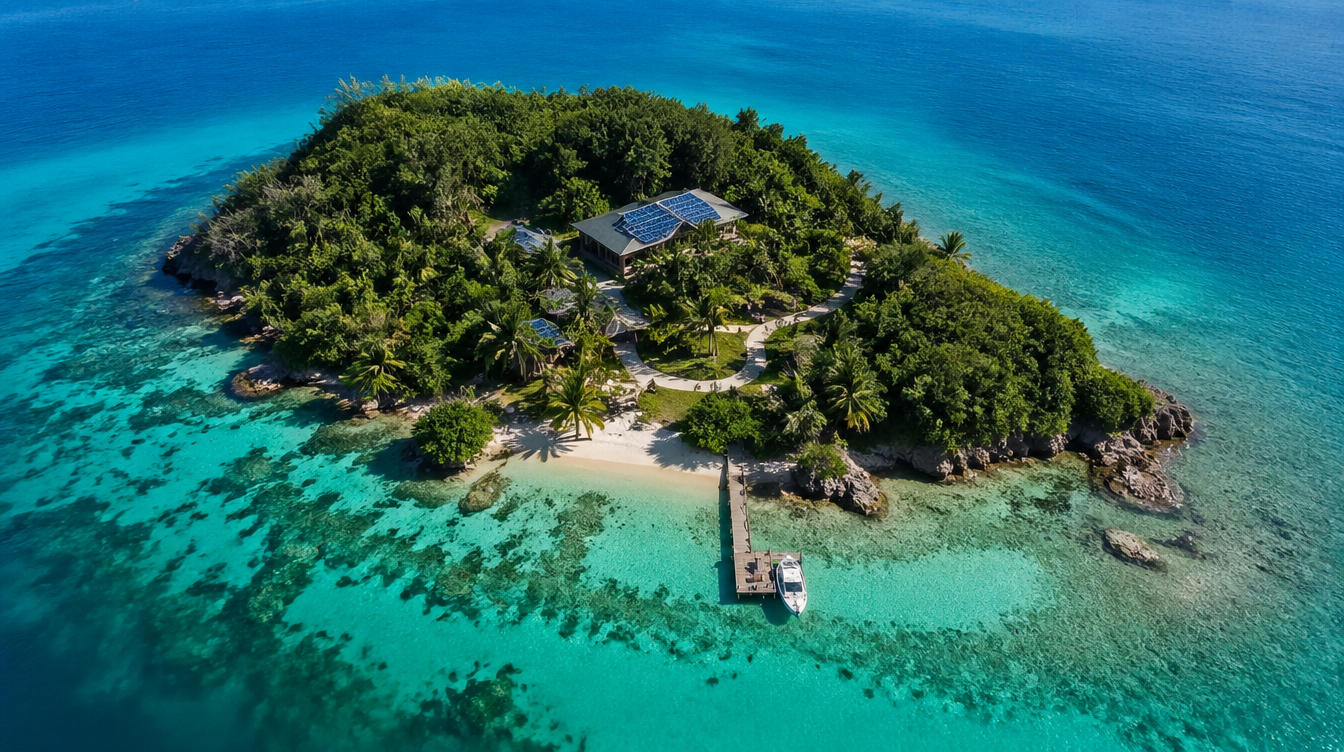 A developed island in the $2–5M range typically includes a main residence, dock, solar system, and water infrastructure.
Frequently asked questions
What is the cheapest private island you can buy? The cheapest islands on the open market start around $50,000–$60,000 for small lake islands in Nova Scotia, Canada or the Finnish archipelago. The cheapest tropical islands start around $200,000 in Belize or Nicaragua. At these prices, expect undeveloped land with no infrastructure.
Can you buy a private island for $500,000? Yes. Islands under $500K are available in Canada (Nova Scotia, Ontario), Scandinavia (Finland, Sweden), Central America (Belize, Nicaragua, Panama), and parts of the South Pacific (Tonga). These are typically small (1–5 acres) and undeveloped. Budget an additional $250K–$500K for basic infrastructure.
What is the 1.8x rule for private islands? The 1.8x rule means the listing price of an undeveloped island is typically only about 55% of what you'll actually spend. The total cost — including closing costs, solar power, desalination, dock, a modest home, and septic — averages approximately 1.8 times the listing price. A $2M island costs roughly $3.6M to make livable.
How much does it cost to maintain a private island per year? Annual operating costs typically range from $84,000 to $310,000, covering property tax ($5K–$50K), insurance ($10K–$50K), maintenance ($30K–$100K), caretaker ($24K–$60K), boat transport ($10K–$30K), and utility maintenance ($5K–$20K). Hurricane-zone insurance is the biggest variable.
Why are private islands so expensive to develop? Island construction costs run 1.5–3x mainland prices because all materials must be shipped by barge, labor must be transported and housed on-island, weather causes frequent delays, and specialized marine construction (docks, seawalls) is inherently expensive. There are no roads, no grid power, and no hardware stores.
The bottom line
A private island costs what a house costs — the price range is just wider. You can get in for under $100K in Canada or spend $100M in the Bahamas. The median globally is $2–5M.
But the listing price is the beginning, not the end. Budget 1.8x the listing price for an undeveloped island, 1.2x for a developed one. Plan for $85K–$310K in annual operating costs. And understand that the true cost of island ownership isn't the purchase — it's making the island livable and keeping it that way.
Ready to see real numbers? Use our cost calculator to model the total cost for any island, adjusted by region, infrastructure choices, and building plans.
Browsing? See what's on the market right now across all price ranges: