All Islands For Sale
5 of 67 listings
$900,000USD
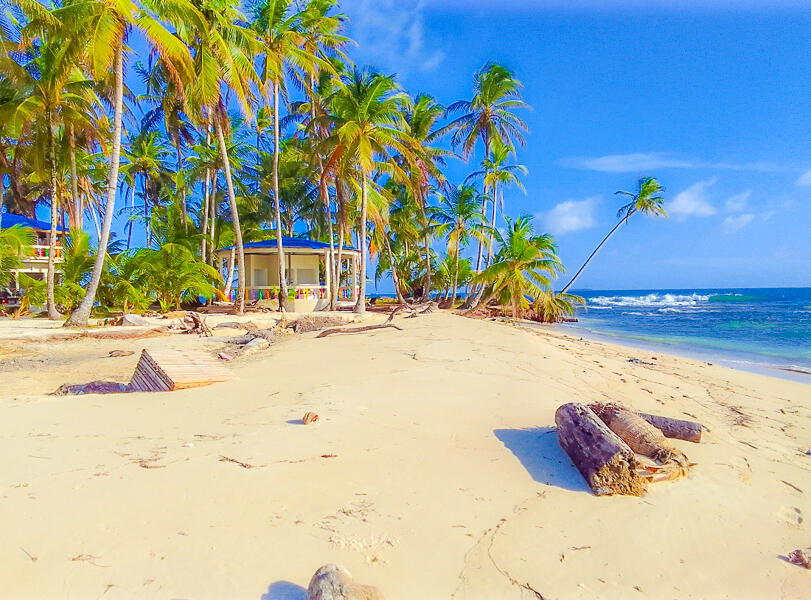
Grape Cay
Pearl Cays, Caribbean Coast of Nicaragua
The Pearl Cays are eighteen small islands scattered across the Caribbean shelf off the eastern coast of Nicaragua, 35 kilometres from the village of Pearl Lagoon. White sand beaches, coconut palms, calm shallow water, surrounding coral reefs. They are one of the least-developed island groups in the Caribbean, and one of the most ecologically significant. In 2010, with the Wildlife Conservation Society, the Nicaraguan government formally established the **Pearl Cays Wildlife Refuge**, covering 700 square kilometres of marine ecosystem and the eighteen cays themselves.
Grape Cay is one of those cays. 2.5 acres of private freehold land, currently offered for sale as a turnkey small-scale tourism operation.
## The Property
Two and a half acres of palm-shaded white sand at the eastern edge of the Pearl Cays group, surrounded by the calm shallow water and outlying reefs that protect the islands from the open Caribbean swell.
The existing improvements, completed during a recent seven-month renovation programme, include:
- A **circular cement main house** with an open-plan living area and fully equipped kitchen
- **Three round thatched cabanas** for guest accommodation
- A **fisherman-style structure** with zinc and palm-leaf roof, used as a beach shelter and equipment store
- A **bar and restaurant** building for the resident tourism operation
- A **workers' cabin** for staff accommodation
- All furnishings, fittings, and operational equipment
- A boat included in the sale
The property is offered as an operating business with the existing improvements, which means a new owner can take occupancy with immediate revenue potential rather than starting from raw ground.
## The Setting
The Pearl Cays sit inside one of the Caribbean's last genuinely undeveloped marine ecosystems. The surrounding waters are home to coral reefs, seagrass meadows, mangrove systems, and a marine fauna inventory that includes:
- **Critically endangered hawksbill turtles**, for which the Pearl Cays are the most important nesting site in Central America
- Green and loggerhead turtles, also nesting in the cays
- Manatees in the protected lagoon and mangrove waters
- Bottlenose dolphins
- Diverse reef fish, including grouper, snapper, jack, and barracuda
- Lobster, conch, and the artisanal fisheries that have sustained the coastal communities for centuries
The nesting season for hawksbills runs roughly May to November, and observation of the turtles, under guided and permitted protocols managed by the Wildlife Conservation Society and the autonomous regional government, is one of the area's defining ecotourism experiences.
The Caribbean coast of Nicaragua more broadly is the historic territory of the **Rama, Kriol, and Miskito** peoples, whose communities form the cultural fabric of the region. Their language, music (the distinctive Caribbean Coast palo de mayo and Garifuna traditions), and Afro-Caribbean and indigenous cuisine remain part of any extended visit to the area.
## What This Property Could Be
The current operating model is small-scale tourism: limited guests, fishing and snorkelling charters, the cabanas as accommodation, and meals at the on-island bar and restaurant. The 2.5-acre footprint and the surrounding wildlife refuge designation place hard ceilings on how much can be built here, which is appropriate to the site and the ecology.
Three directions are realistic for the next owner:
**Continue the existing operation,** retaining the cabanas, the staff, and the established customer flow as an immediately profitable small lodge.
**Convert to a fully private retreat,** decommissioning the commercial side and keeping the existing structures for personal and guest use.
**Reposition as a conservation-aligned ecotourism partnership,** working formally with the Wildlife Conservation Society or one of the Nicaraguan autonomous regional authorities to integrate the property with the wildlife refuge's protection programmes. Properties of this type, when run carefully, can become net contributors to conservation outcomes and command premium positioning in the responsible-tourism market.
## Due Diligence
The Pearl Cays sit inside the **Región Autónoma de la Costa Caribe Sur (RACCS)**, one of Nicaragua's two autonomous coastal regions, whose property law combines national title with indigenous communal land claims that are still being formally adjudicated for parts of the coast. Due diligence for this property includes:
- Verification of clean freehold title under Nicaraguan and RACCS law
- Confirmation that the existing improvements comply with Pearl Cays Wildlife Refuge environmental regulations and were permitted at construction
- Review of operating licences for the tourism business
- Independent environmental assessment of the property, particularly regarding the hawksbill turtle nesting beaches that are protected across the Pearl Cays generally
A licensed Nicaraguan property lawyer with specific experience in the autonomous coastal regions should review the title package before deposit. This is standard practice for any Caribbean coast Nicaragua transaction and is not specific to this property, but it matters more here than in most Caribbean jurisdictions because of the layered legal context.
## Access
- **From Managua (Nicaragua's capital):** by domestic flight to Bluefields (1 hour) or by road and river to Bluefields (approximately 6 hours via Rama)
- **From Bluefields to Pearl Lagoon village:** approximately 1 hour by panga (small motorboat) up the coast
- **From Pearl Lagoon to Grape Cay:** approximately 1 hour by boat across the Pearl Lagoon shelf, depending on conditions
- **Total journey from Managua to the island:** approximately 4 to 8 hours depending on transport choices
- **International flights:** Managua's Augusto C. Sandino International Airport serves direct routes from Miami, Houston, Atlanta, Panama City, San José, and Madrid
## The Position
Caribbean private islands of this size are reaching markets less and less frequently. The Pearl Cays remain one of the lowest-density and most ecologically intact island groups in the Caribbean, and freehold titles within the cays have historically been very rare. A buyer with a thoughtful position on the relationship between private ownership and ecosystem stewardship will find this property either a genuine opportunity or a significant responsibility, depending on how it is approached.
For full title documentation, the operating business package, and the environmental compliance file, inquire through Private Island Market.
2.5 AcresLeasehold
Listed 76 days ago

$1,000,000USD
Lake Mälaren Private Island
Stockholm County, Drottningholm, Sweden
The Swedish Royal Family lives at **Drottningholm Palace**, on the island of Lovön in Lake Mälaren, 11 kilometres west of central Stockholm. The palace, the gardens, the 18th-century theatre, and the surrounding cultural landscape were inscribed by UNESCO as a **World Heritage Site in 1991**, the first Swedish site to receive that designation.
This listing covers a small private island in the same waters of Lake Mälaren, within sight of the palace and within the same geographic setting. The island carries a 58-square-metre holiday home, a guest cottage, a gazebo, docking platforms, and a small neighbouring island included in the sale.
It is one of the rare private islands anywhere in Europe where the cultural setting matters more than the acreage.
---
## The Position
The view from this island, on a clear day, includes the **Drottningholm Palace complex**, the official residence of King Carl XVI Gustaf and Queen Silvia of Sweden since 1981. The palace itself was commissioned in 1662 by Queen Hedvig Eleonora and designed by Nicodemus Tessin the Elder and his son Tessin the Younger, both of whom drew on the French royal architectural tradition of Versailles to create what has been called the Versailles of Sweden.
Beyond the palace, the wider Drottningholm cultural landscape includes:
- **The Drottningholm Palace Park**, modelled in the formal French and English landscape traditions of the 17th and 18th centuries
- **The Chinese Pavilion**, an 18th-century summer palace within the gardens, one of the most refined examples of the European chinoiserie aesthetic
- **The Drottningholm Palace Theatre**, an 18th-century court theatre with its original wooden stage machinery still operational, used for opera performances during the summer season
- **The UNESCO-inscribed cultural landscape** as a whole, which includes Lovön and the surrounding waterways
The relationship between the island and the palace is not symbolic. From the property's shoreline, the cultural ensemble is part of the daily view across the water.
---
## The Property
The island itself is intimate by design and complete by function. A buyer is acquiring:
- **A 58 m² holiday home**, the main residence on the island, configured for the contained living that a small private island makes possible
- **A guest cottage**, providing separate accommodation for visitors or family members
- **A gazebo**, the outdoor social space for the long Swedish summer evenings and the morning sun across the lake
- **Docking platforms**, providing direct boat access for arrivals, departures, and the daily rhythm of an island life on Lake Mälaren
- **A small neighbouring island**, included in the purchase, expanding the privacy buffer and the recreational footprint of the property
The 58 square metres of the principal residence is purposeful. Swedish summer-house architecture at this scale tends toward the well-considered: every square metre worked into a multi-functional life. The buyer of this property is not acquiring a sprawling estate; they are acquiring a beautifully positioned, perfectly sized retreat, with the additional asset of a separate small island held under the same title.
---
## Lake Mälaren
**Lake Mälaren** is Sweden's third-largest lake, covering 1,140 square kilometres and connecting Stockholm to the wider Swedish interior. The lake holds **over 1,000 islands**, many private, some inhabited, some preserved as nature reserves, others working farms and country estates. The Stockholm archipelago, with which Mälaren is connected via the city's central waterways, has been considered one of the world's premier sailing and small-boat regions for over a century.
The water of Lake Mälaren is fresh, warm enough in summer to reach 26°C, and clean enough to support strong populations of pike, perch, zander, and the freshwater fish that have anchored Swedish lakeside life for generations.
The boat journey from central Stockholm to Drottningholm, taken historically and still today on the working steamship **S/S Drottningholm** or the motor vessel **M/S Prins Carl Philip**, is one of the most distinctive arrivals in Stockholm. The same vessels pass within view of this island on their daily summer routes.
---
## The Access
The island sits **800 metres from the mainland shore**, accessible by private boat. The mainland approach is supported by community-shared parking and boat-mooring facilities, with the queue system that governs many Swedish island communities organising the slot allocation. These spots are part of the property's community-facility rights.
- **From central Stockholm:** approximately 30 to 40 minutes by car to the mainland boat dock, or a longer scenic journey by water through Lake Mälaren
- **From Stockholm-Bromma Airport (BMA):** approximately 6 kilometres southwest, with direct flights from European hubs
- **From Stockholm-Arlanda Airport (ARN):** approximately 50 km, with global connections including direct flights from New York, London, Frankfurt, Dubai, and most major European capitals
- **From Ekerö:** approximately 4 kilometres, with the nearest village amenities
The combination of direct city access (within the metropolitan boundary of Stockholm), proximity to two international airports (one of them 6 km away), and complete island privacy is rare anywhere in Europe and almost unique within the orbit of a national capital.
---
## What This Property Is For
The island is too small for a hotel, too small for a multi-villa compound, too small for a serious commercial operation. It is exactly the right size for what it is intended to be: **a private summer home with one of the most extraordinary cultural views in Europe**, accessible to a buyer who does not need to be a billionaire to acquire it.
For a buyer who has been thinking about owning a Swedish island but has found that most properties in the Stockholm orbit are either expensive country estates or remote archipelago summer houses without the cultural setting, this is the genuine alternative. A 58-square-metre holiday home, a guest cottage, a gazebo, docking platforms, and a second small island. All freehold. All within view of the home of the Swedish royal family.
---
## A Note on Swedish Ownership
Sweden is a member of the European Union, and **EU citizens** purchase Swedish property on the same terms as Swedish nationals. **Non-EU buyers** are welcome to acquire Swedish property under the country's open foreign ownership framework, with the standard transfer process handled through a Swedish notary and the local cadastre office.
Sweden's property law is among the most transparent in Europe. The land registry is digital, comprehensive, and publicly accessible. Title is unambiguous. The transaction process is fast by European standards.
Swedish residency does not flow automatically from property purchase, but a property in this position pairs naturally with the kind of seasonal or part-year residence that a non-Swedish buyer is likely to operate. A licensed Swedish property lawyer should structure any transaction.
---
## The Position
The island near Drottningholm is an unusual category of property: small enough to be accessible at a price point well below the trophy-island tier, with a cultural and geographic setting that the trophy-island tier itself struggles to match. The Swedish royal residence is on the next island. The UNESCO World Heritage Site is the daily view. Central Stockholm is a 30-minute drive or a scenic boat journey. Bromma Airport is 6 kilometres away.
For the buyer thinking about a Stockholm summer home that they can actually own as a private island rather than as a lakeside cottage, this is the position from which to do it. Most of Sweden's private islands sit hours from the cities and offer wilderness rather than cultural setting. This one is the inverse: in the city, on the lake, with the royal palace as the daily horizon.
0.3 AcresFreehold
Listed 76 days ago

$250,000USD
Cheron Islets
Culion Island, Palawan, Philippines
The waters around Culion are the same waters around Coron. The same archipelago, the same limestone karst rising out of the same blue. The difference is how few people have heard of Culion, and how completely those waters have remained themselves as a result.
Culion was sealed off from the world for exactly one hundred years, from 1906 until the World Health Organization declared the island leprosy-free in 2006. A century of low development is rare on a tropical archipelago. The reefs survived it. The mangroves survived it. The light on the water in the late afternoon, when the sun drops behind the karst islands to the west, is what tropical light was before tourism found the tropics.
Today the local tourism office uses one official phrase to describe Culion: *Paradise Regained*. The town keeps a coral-rock church built in the 1700s from blocks of fossilised reef, a 1740 Spanish fort, and an archive inscribed on UNESCO's Memory of the World register. The bay holds Japanese WWII shipwrecks now overgrown with coral, ranked among the finest wreck dives in the world.
This listing covers two adjacent islets in those waters, near the well-known sandbar of Cheron Island, in the same bay as the overwater bungalows of Two Seasons Coron Island Resort.
## The Land
Two lots. One acre between them.
- **Lot A:** 2,360 sqm
- **Lot B:** 1,653 sqm
- **Combined:** 4,013 sqm
These are not large parcels. They are intimate ones, the size where a thoughtful house, a swimming dock, and a small garden are exactly enough, and where every step takes you closer to the water rather than further from it.
The water itself is the asset. Calamian water is the kind divers fly across continents to find: clear enough at noon to read a book through, warm year-round, and full of life. From your own dock you will see schools of needlefish in the shallows and, on still mornings, the silhouettes of the karst islands of Coron Bay rising in the distance like an unfinished sentence.
## What Surrounds You
**Two Seasons Coron Island Resort & Spa** sits in the same bay, with overwater bungalows, a private beach, and a full spa. Owners building on islands in this part of Palawan often use a resort like this as their base during construction, and as overflow for the kind of guests who want a proper bed within walking distance of the bar.
**Culion town** is a 30-minute speedboat ride away. The plaza, the coral-rock Immaculate Conception Church, the museum with its UNESCO-inscribed archives, the small market, the easy rhythm of a place that knows exactly what it is.
**Coron town** sits across the strait for shopping, restaurants, and onward connections.
**The reefs and lagoons** of Kayangan Lake, Twin Lagoons, Barracuda Lake, and the wrecks of Coron Bay are all within day-trip range of your own dock.
## Access
- **By air:** Manila or Cebu to Francisco B. Reyes Airport on Busuanga Island. Roughly 75 minutes from Manila, daily flights.
- **From the airport:** Van and boat transfer to Culion, then a smaller boat to the islets.
- **Once in the Calamians:** Boats are the road network, and a small private boat is part of the pleasure of an island home here.
---
The waters around Culion are the same waters around Coron. The difference, for now, is how few people have heard of Culion.
1 AcresLeasehold
Listed 76 days ago

€180,000EUR
Myrholmen Private Island
Södermanland, Katrineholm Municipality, Sweden
Selma Lagerlöf called Sörmland *Sweden's pleasure garden*. From Myrholmen's docks, you understand why before your coffee cools.
The island sits in Djulösjön, the lake at the heart of a province that holds 400 lakes and as many castles. Across the water, the white facade of Stora Djulö Manor has stood since the 1720s, on grounds first recorded in 1334. Lagerlöf wrote that very view into *The Wonderful Adventures of Nils* as the *Beautiful Pleasure Garden*, where Nils Holgersson rested on his journey across Sweden. From your dock, you see what he saw.
## What Myrholmen Is
A small island. The name itself tells you so. *Holmen* means islet, and Myrholmen earns the word. You can walk its perimeter in minutes.
But small means intimate, not constrained. There are docks in three directions: east for morning light, south for the long Swedish afternoon, west for sunsets that linger past ten in June. Wherever the day puts you, the sun is there too.
## The Buildings
Four structures, each doing its job without apology.
**The main house** holds the master bedroom, with space for a double and a single bed, and the kitchen. The kitchen runs on gas: a stove, a fridge, and a freezer compartment, all powered without a wire to the mainland. Off-grid by design, not by compromise.
**The guest cottage** adds three more sleeping places. Six guests in total, with no one giving up a bed.
**The sauna** is wood-fired. The cool Nordic summer night demands it; the lake, three steps away, finishes the job. Swedes built an entire summer culture around this single ritual, and on Myrholmen you have it to yourself.
The fourth building houses a dry toilet, the unglamorous detail that makes a freshwater island work.
## The Setting
You are three kilometres from the centre of Katrineholm, and a short row from Stora Djulö Manor itself, which now operates a café, restaurant, and ice cream bar with outdoor seating along the same shore you wake up to. The Djulö canoe club shares that shoreline. So does the manor's medieval stable, now a folk museum, and a hostel run inside the old red estate buildings, the oldest dating from the 1600s.
Beyond Djulösjön lies all of Sörmland: roughly 400 manor houses (more than any other Swedish province), the 1,000-kilometre Sörmlandsleden hiking trail, deer and wild boar in the forests, and the white water-lily (the provincial flower) opening in the quieter bays of your own lake. The regional tourism board calls it *Stockholm Country Break*. It is the countryside that Stockholm itself escapes to.
## The Practicalities
- **Stockholm Central to Katrineholm:** 52 minutes by direct train, hourly service, every day of the year.
- **Skavsta Airport** is closer still, with flights to most of Europe.
- **Mainland easements:** three parking spaces and a private dock, so you and your guests reach the island the same way the original owners did.
- **Included in the sale:** a rowboat.
- **Utilities:** gas-fired appliances throughout; the island is off-grid by design.
The arithmetic is simple. You leave Stockholm after a Friday meeting, reach Katrineholm in under an hour, row across, and have your feet in the lake before the sun touches the pines.
## What You Are Buying
Not a mansion. Not a compound. A small island with everything a thoughtful Swedish family would build for a hundred summers, and nothing they would not.
Selma Lagerlöf was right about the pleasure garden. Myrholmen is the part she did not put in the book.
0.1 AcresFreehold
Listed 76 days ago

$380,000USD
Isleta El Paraíso
Las Isletas de Granada, Lake Nicaragua
Roughly twenty-three thousand years ago, the northeast flank of the Mombacho volcano collapsed and slid, in a single catastrophic afternoon, into the lake at its feet. The debris travelled twelve kilometres before it stopped. When it did, the higher points of the avalanche remained above water as 365 small green hummocks, each one a former piece of the volcano's slope.
This is Las Isletas de Granada. The archipelago is among the most distinctive in the world, geologically speaking: an entire island chain that was once the side of a single mountain. The mountain itself, still active enough to vent sulfur from its summit fumaroles, looks down on the islets today from across the water. The colonial city of Granada, founded by the Spanish in 1524 and the oldest continuously inhabited European-founded settlement in mainland America, sits twenty minutes from the islets by boat.
Isleta El Paraíso, *the paradise*, is one of those 365 islets, available now.
## The Property
Approximately one acre of palm-shaded, lake-fringed Nicaraguan island, dressed in native flora and decorative gardens that have been thoughtfully integrated into the island's tropical character.
The improvements include:
- **Two bungalows**, comprising three bedrooms in total across both
- A **ranch-style outdoor pavilion**, suitable for dining, gathering, and the kind of long lake-front afternoon the islets are built for
- A **separate caretaker's house** for resident on-island staff
- **Piped electrical service** to the island
- A **large water storage tank** for freshwater supply
- All furnishings included with the sale
The arrangement is small but complete. A family can occupy the island as a primary or secondary residence with the existing infrastructure, and the caretaker's quarters allow year-round maintenance whether the owners are in residence or abroad.
## The Setting
Las Isletas de Granada is the rare private-island archipelago where the islands are a normal part of regional life rather than an isolated luxury enclave. The islets host a community of around 1,200 residents, including local Nicaraguan families, expatriates from the Americas and Europe, several boutique ecolodges and restaurants, a 16th-century Spanish fort, and even a small lakeshore school. Boats move between the islets the way cars move along a street in a small town. The everyday rhythm is gentle, neighbourly, and characteristically Nicaraguan.
What makes the position remarkable is the backdrop.
**Mombacho Volcano** rises 1,344 metres directly behind the archipelago, cloaked in cloud forest at its summit and protected as the Mombacho Volcano Nature Reserve. The reserve protects 457 plant species, 87 species of orchid, 186 bird species, and several creatures found nowhere else on earth, including the endemic Mombacho salamander and the Mombacho butterfly. Day hikes from Granada lead through the cloud forest to vantage points overlooking the islets and the lake.
**Lake Nicaragua (Lago Cocibolca)** is the largest lake in Central America, 8,264 square kilometres of fresh water, with **Ometepe Island** and its twin volcanoes visible on the horizon on clear days. The lake is one of only a small handful in the world that historically supported a freshwater shark population.
**Granada**, the colonial city, lies twenty minutes north by boat. The streets are cobblestoned, the cathedral pink, the architecture restored, and the restaurant scene one of the most refined in Central America. Cafés in colonial courtyards. Galleries in former merchant houses. A daily market that has been operating since before American independence.
**Masaya Volcano**, an active basaltic shield with a permanently glowing lava lake at the bottom of its main crater, lies 30 minutes inland. Night tours descend to the crater rim while the lava is visible.
**Managua International Airport** is approximately 45 minutes from Granada by car, with direct flights from Miami, Houston, Atlanta, Fort Lauderdale, Panama City, San José, Mexico City, and Madrid.
## A Day, In Sketch
Mornings on the islets begin with mist rising off the lake and the call of howler monkeys from the surrounding islands. Boats from Granada cross the water to the city's markets and back. Egrets and herons stalk the shallow water at the island's edge. Pelicans and cormorants wheel overhead. A family of mantled howler monkeys lives a few islets across.
Breakfast on the ranch pavilion. Coffee, fresh fruit, *gallo pinto* if the resident cook is preparing it. The lake mirror-flat in the early hours, the silhouette of Mombacho beginning to take shape as the cloud burns off.
The day is whatever the owners choose. A boat into Granada for lunch in a colonial courtyard. A hike up Mombacho's cloud forest trails. A kayak through the maze of channels between the neighbouring islets. A book in a hammock on a small private beach.
Late afternoon, the light over the water turns gold, and the volcano's profile darkens against the western sky. Dinner can be on the island or in Granada. The boat ride home in the dark, with the lights of the colonial city behind you and the silent dark of the lake ahead, is one of the experiences Las Isletas residents tend to mention first when describing why they live here.
## The Position for the Next Owner
This is the entry tier of the private-island market and is priced accordingly. A one-acre Nicaraguan island with two bungalows, a caretaker's residence, full utilities, and the geographic and cultural assets of the Granada region attached to it is one of the more accessible ways to acquire a freehold tropical island anywhere in the world.
The property is suitable as:
- A **primary residence** for a buyer relocating to or retiring in Nicaragua's most established expatriate region
- A **part-time or seasonal residence** for a buyer based in North America or Europe, with the caretaker maintaining the property during absences
- A **boutique vacation rental**, with two bungalows and the ranch pavilion already configured for hosting guests
- A **small ecolodge expansion** integrated with the existing tourism infrastructure of Las Isletas
Nicaragua welcomes foreign buyers under straightforward property law, with no nationality restrictions on private residential real estate ownership outside the autonomous coastal regions. A licensed Nicaraguan notary handles transfer, and a local property lawyer is recommended for any cross-border transaction.
## Access
- **From Managua's Augusto C. Sandino International Airport:** approximately 45 minutes by car to Granada
- **From Granada to Las Isletas:** approximately 15 to 20 minutes by panga (small motorboat) from Puerto Asese or one of the other lakefront marinas
- **From the islets boat docks to Isleta El Paraíso:** a short final crossing among the channels of the archipelago
A buyer arriving in Managua in the morning is on the island by lunch.
---
Las Isletas de Granada was a single volcano's slope before it became 365 islands. Now one of those islands, with two bungalows and an acre of palm shade and a view of where the original mountain stands, is for sale.
1 AcresInformation upon request
Listed 76 days ago