

Nengo Nengo
Tuamotu Archipelago, French Polynesia · 2224 acres · Freehold
About This Island
Nengo Nengo
Private Atoll, Tuamotu Archipelago, French Polynesia
There are perhaps fifteen privately owned atolls in the eastern South Pacific. Nengo Nengo is one of them, and the only one currently for sale.
Two hours by light aircraft southeast of Tahiti, deep in the Tuamotu Archipelago, the atoll is a coral ring 13 kilometres long and 8 kilometres across, enclosing a 67-square-kilometre lagoon of water so clear that it is often compared to a swimming pool. Nine square kilometres of emerged land. A 45-metre lagoon depth, with the salinity, oxygenation, and nutrient profile that have made it, for the past two decades, one of the most productive single-source pearl farms on earth.
The current owner is Robert Wan, the man most often called the King of Tahitian Pearls, whose company is the largest cultivator and exporter of black pearls in French Polynesia and the world. Nengo Nengo has been the centrepiece of his operation since the early 2000s.
He is selling it.
The Atoll
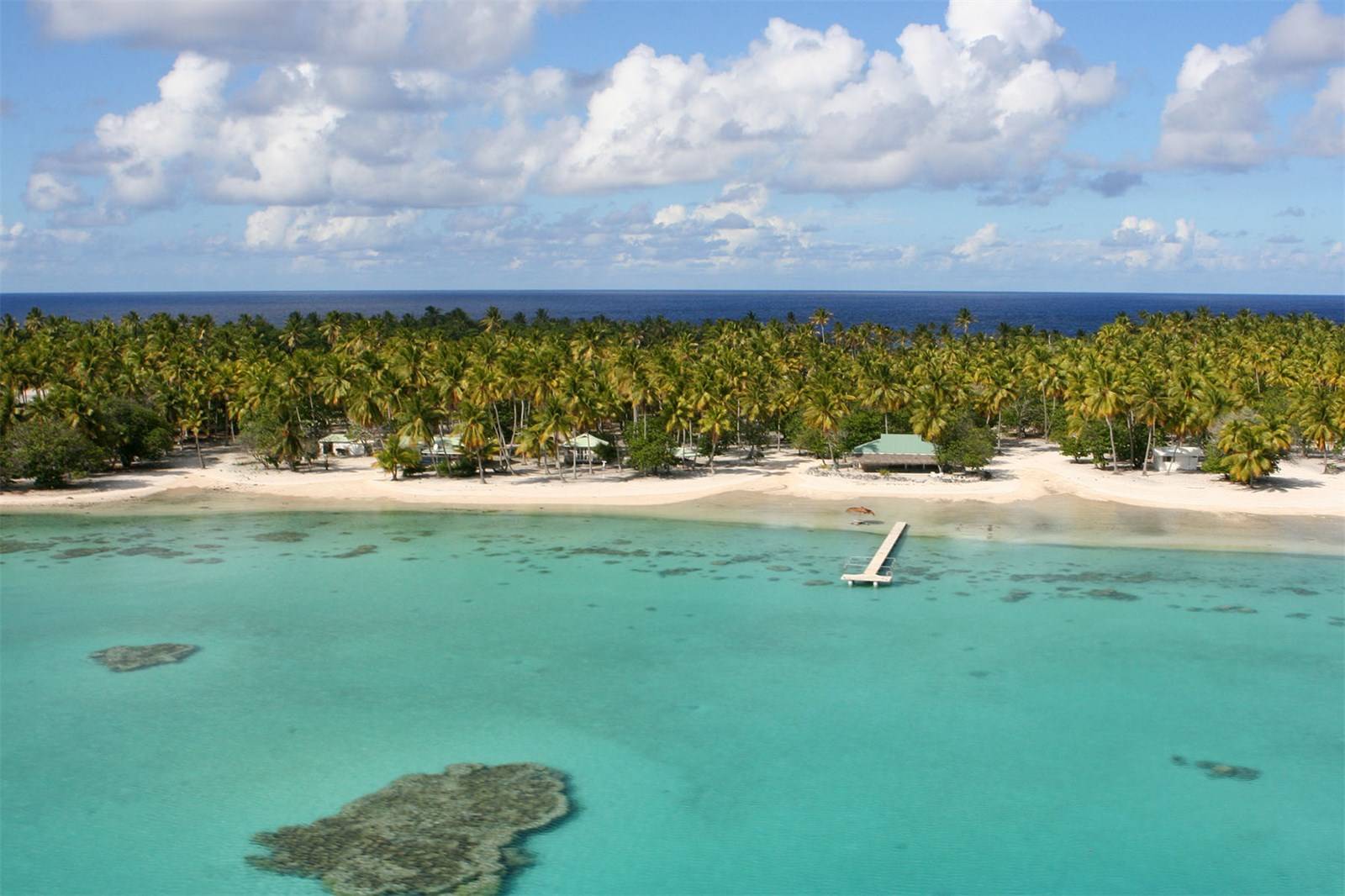
A bell-shaped coral atoll, oriented along a north-south axis, with a narrow navigable pass at its northern edge providing the only deep-water access to the lagoon.
- Total area: approximately 2,224 acres (900 hectares)
- Emerged land: 9 square kilometres distributed around the rim and across numerous islets
- Lagoon: 67 square kilometres of enclosed water, 45 metres at its deepest
- Coastline: roughly 42 kilometres of reef edge and beach
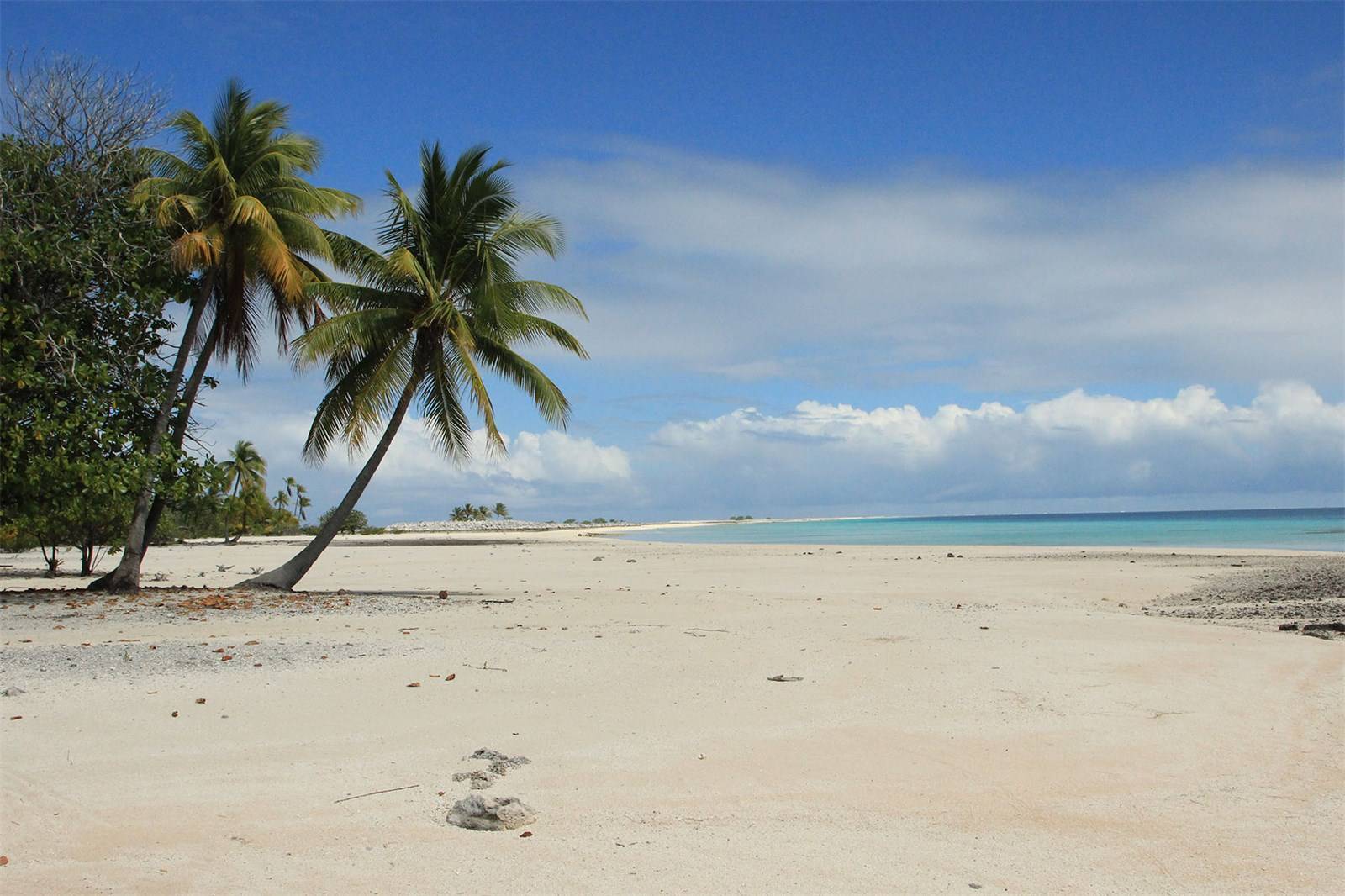
- Beaches: white and pink sand, the latter a product of the pulverised coral and shell that the Tuamotu atolls are known for
The lagoon is the central asset. Tuamotu atolls are famous in marine biology for the contained, semi-isolated ecosystems they create, where the lagoon water moves slowly enough to develop its own chemistry and quickly enough to remain alive. Nengo Nengo's lagoon is regarded among Polynesian pearl farmers as the textbook example: stable salinity, deep oxygenation, the right nutrient flow, and a temperature profile that hits the narrow band Pinctada margaritifera oysters require to produce gem-quality pearls.
The same conditions that make the lagoon ideal for pearl culture make it ideal for marine life generally. The waters of Nengo Nengo are densely populated with fish, with minimal commercial fishing pressure across decades of private ownership. Reef sharks, eagle rays, hawksbill and green sea turtles, and the deep tropical biodiversity of the central Pacific are at full strength here.
The Infrastructure
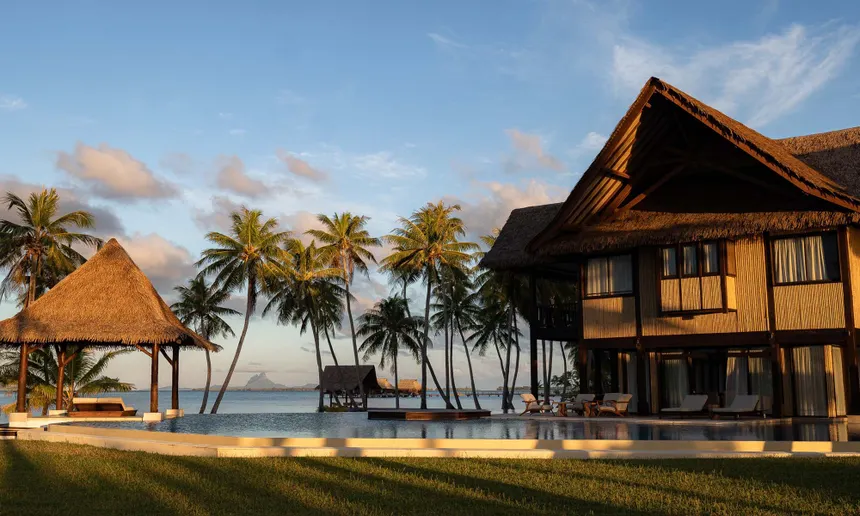
Nengo Nengo is not raw land. It is a working private island with the operational infrastructure of an industrial-scale pearl farm.
- A private airstrip, capable of accommodating light aircraft, eliminating the otherwise prohibitive boat journey from Hao or Tahiti
- Operational and accommodation buildings that previously housed up to 80 workers during peak pearl farming seasons
- A deep-water pass into the lagoon, with piers and small-craft facilities
- Monthly cargo ship rotation from Tahiti, an established supply line that a new owner inherits
- A resident caretaker team of approximately six people currently maintaining the property, including a young couple in long-term residence
What this means for the next owner is that the most expensive part of any island development, getting people, materials, and supplies to a remote South Pacific location, is already solved. A new villa, a science centre, an eco-resort, or a continued or expanded pearl operation can be built on foundations that already exist.
The Pearl Operation
For the past twenty years, the Nengo Nengo lagoon has produced Tahitian black pearls under the Robert Wan operation. These are the lustrous dark pearls, ranging in colour from peacock green to aubergine to silver, that French Polynesia is the world's only commercial source for. A single high-grade Tahitian pearl can sell for between several hundred and several tens of thousands of dollars depending on size, lustre, and colour.
The pearl operation on Nengo Nengo can be continued, expanded, or wound down by the next owner. Pearl concessions of up to 500 square metres of lagoon area may be retained by ownership for the cultivation of Pinctada margaritifera oysters, creating a working aquaculture income stream tied directly to land title. For a buyer with a thesis about owning a renewable luxury-goods source, this is a structurally unique opportunity: very few land assets anywhere in the world produce gemstones as part of their normal operation.
The Possibilities
The seller has been transparent that Nengo Nengo's next chapter is a question for the buyer to answer. Three directions are immediately viable:
A private estate. With the airstrip, the existing infrastructure, and the absolute isolation of the location, Nengo Nengo can be developed as a private South Pacific residence at a scale that no inhabited island can match. The buyer would join the very small global cohort of private atoll owners.
An ultra-luxury eco-resort. The Tuamotu Archipelago has no comparable private resort. A development integrating the pearl operation, marine science, and limited high-end accommodation would have a position no competitor could replicate, on a lagoon that is already among the cleanest and most biodiverse in French Polynesia.
A scientific and conservation centre. Earlier seller materials describe a science centre planned for the southwestern part of the atoll, intended for sea turtle protection and monitoring. A buyer with conservation as a primary motivation can build on these plans and on the working biology of the lagoon.
Or some combination of all three. The atoll is large enough to hold all of them without proximity conflict.
The Setting
The Tuamotu Archipelago is the largest chain of atolls in the world, 77 islands and atolls spread across an ocean area larger than Western Europe. The chain runs east-south-east from the Society Islands and includes Rangiroa, Fakarava, and Tikehau, which are the best-known publicly accessible atolls, and a series of smaller and more isolated coral rings that include Nengo Nengo.
The atoll is 42 kilometres southeast of Ravahere, its nearest inhabited neighbour, and approximately 100 kilometres southwest of Hao, the regional administrative centre. Tahiti and Papeete lie 775 kilometres west.
The horizon, in every direction from Nengo Nengo, is empty ocean.
Access
- By light aircraft from Tahiti (Faa'a International Airport): approximately 2 hours direct, landing on the atoll's own airstrip
- By aircraft from Hao: approximately 30 minutes, with onward charter or boat connection
- By cargo ship from Tahiti: monthly rotation, the standard supply route for the atoll
- Onward connection from Faa'a: direct flights to Los Angeles (8 hours), Auckland (5 hours), Paris (via Los Angeles), and onward worldwide
A buyer's representative leaving Los Angeles in the morning is on Nengo Nengo's airstrip the same evening.
A Note on Ownership
French Polynesia operates under French civil law with adaptations for the territory. Foreign buyers are permitted to purchase private land directly, with notarial transfer through a French notary. Pearl concessions in the lagoon are subject to French Polynesian aquaculture regulations and are transferred with the property.
The Position
Nengo Nengo is the rarest category of property in the world: a large, freehold, infrastructure-complete, productive private atoll in the South Pacific, with the working operations of one of the world's leading pearl houses included in the sale. There are not thirty pearl islands in the eastern South Pacific. Of those, the number genuinely available for outright purchase has historically been close to zero.
The next owner inherits an airstrip, a lagoon that produces gem-quality pearls, the operational continuity of the Robert Wan team, and the horizon of the central Pacific Ocean in every direction. The atoll has been described as a waking dream, in the slightly heightened language that French luxury real estate is known for. The underlying claim, in plainer English, is straightforward: there is nothing else like this on the market, and there has not been for a generation.
Everything You Need To Know
French Polynesia
Detailed jurisdiction data for French Polynesia coming soon. Browse our buying guides for general information.