
Île de Caille
Grenadines Archipelago, Grenada · 55 acres · Freehold
About This Island
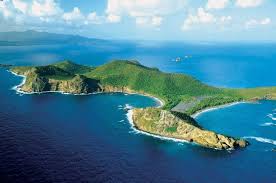
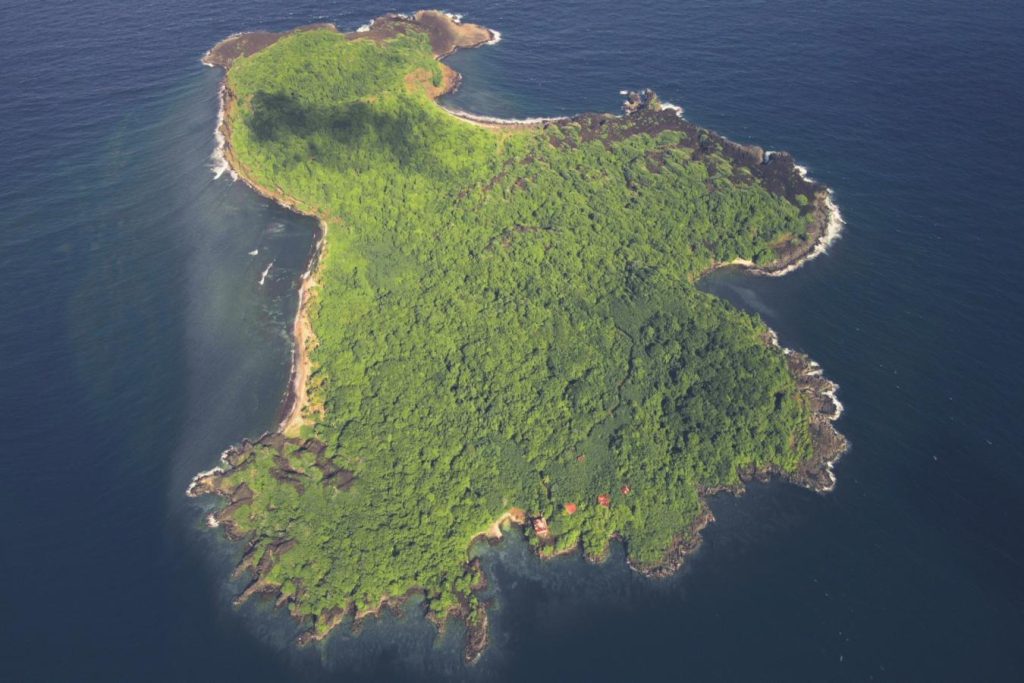
Isle de Caille, also known as Caille Island or Île de Caille, is a private island of roughly 155 acres in the Grenadines, about four miles off the northern coast of Grenada and fifteen minutes by boat from the mainland. Two gentle volcanic knolls anchor its eastern and western ends, with a green valley between them, three beaches along its shores, and the deep blue water of the passage between Grenada and Carriacou on every side.
It is mostly undeveloped, which is the point. For a buyer with a vision and the patience to realise it, Isle de Caille is a blank canvas in one of the most celebrated sailing regions in the world.
The Land
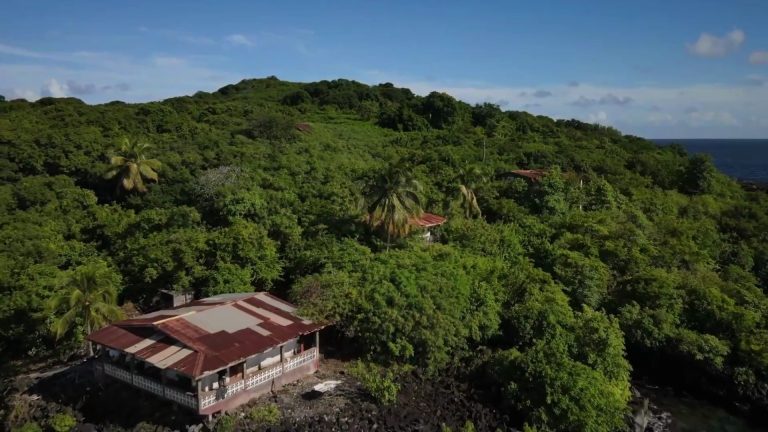
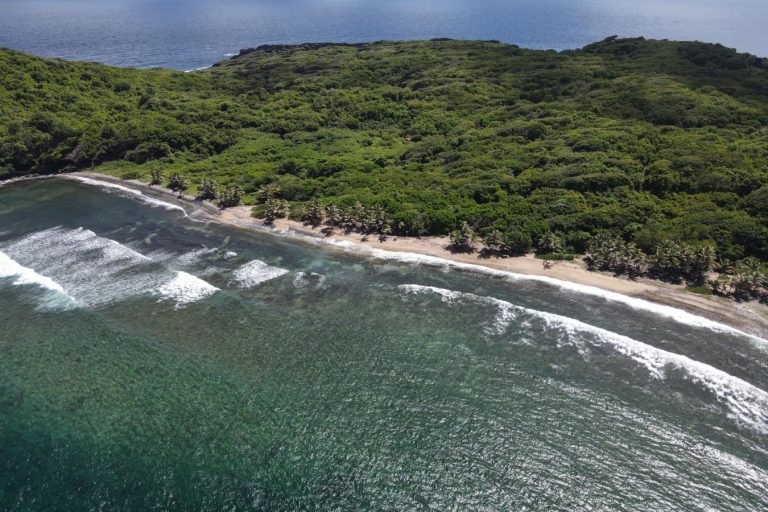
The island runs roughly 1.2 kilometres by 880 metres, rising to about 80 feet at its two volcanic high points. The terrain is the gentle, green, and rocky profile of the Grenadines: dense vegetation across the interior, coconut palms, scattered fruit trees, and the black volcanic rock that marks the island's eastern shore and speaks to its geological origin.
- Three beaches, the largest around 350 metres of sand on the northern shore, facing the neighbouring island of Ronde, with the remaining coast mostly rocky and dotted with small protected bays
- Two volcanic knolls at the eastern and western ends, with a central valley between them, giving the island both elevated building sites with panoramic seascapes and sheltered lower ground
- Black and white pebble shores along the rockier margins, and the mixed blue-green water that gathers in the bays
The surrounding water is the island's recreational heart. The calm bays are ideal for snorkelling and scuba diving, and the wider passage offers excellent sailing and offshore fishing. The Sisters, a famous dive site of volcanic pinnacles 2.6 kilometres away, is visible from the island.
The Existing Improvements
Isle de Caille is not raw ground. It carries the bones of earlier occupation, and a buyer inherits a meaningful head start on infrastructure, though each element requires work.
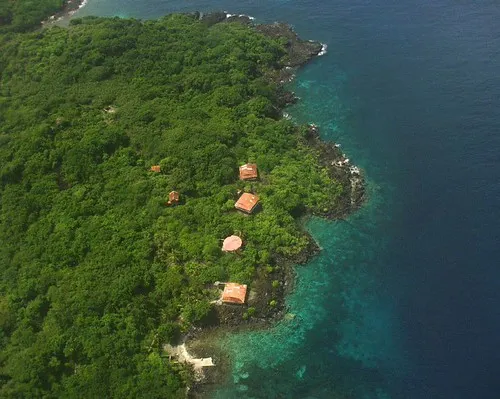
- Five cottages, positioned at height to overlook the Caribbean Sea and the neighbouring islands, each requiring full restoration or rebuild to reach its potential as a residence or vacation rental
- An older pier and a concrete jetty on the western side, providing water access
- A freshwater cistern for rainwater harvesting, in need of reconditioning, with a flat concrete top that has in the past served as a landing pad for helicopters (there is no formal heliport)
- A network of dirt roads and trails, wide enough for an all-terrain vehicle, threading the island's interior and connecting the building sites to the beaches and the jetty
The realistic infrastructure plan for a new owner combines rainwater harvesting from a reconditioned cistern, or desalination, for fresh water, and generators with solar power for electricity. The island does not currently have running water, mains electricity, or paved roads, which a buyer should understand clearly. This is an undeveloped island with the foundations of past use, not a turnkey estate.
The Development Opportunity
The gentle scale and the existing improvements make Isle de Caille a more approachable development proposition than the largest Grenadines islands, while still offering genuine scope. Credible directions include:
- A private estate. A principal residence on one of the volcanic knolls, with the restored cottages as guest accommodation, and the rest of the 155 acres held as private grounds and nature reserve.
- A boutique hotel or villa resort. The elevated sites, the three beaches, and the existing road network support a low-density luxury development in the manner of the leading Grenadines private-island resorts.
- A vacation-rental operation. The five cottages, fully restored or rebuilt, each with its own outlook over a different section of the island, could form the basis of an income-generating rental portfolio.
- A mixed private-and-conservation holding. A single residence with the majority of the island retained in its natural state, aligned with the ecological character of the wider Grenadines.
The island's own materials note that development might include a luxury hotel, villas, private estates, a marina, and more. The scale is generous enough to combine several of these on different parts of the island.
The Setting
Isle de Caille sits in the Grenadines, the chain of islands running north from Grenada toward St. Vincent that is widely regarded as one of the three or four finest sailing regions on earth. The island lies in the passage between Grenada and Carriacou, at the southern end of the archipelago.
Its immediate neighbour is Ronde Island, less than 350 metres to the north, the largest privately held island in the Grenadines. Beyond, the archipelago opens toward the Tobago Cays, Mustique, Petit St. Vincent, Palm Island, and the other celebrated islands of the chain, all reachable by yacht. The wider region is under consideration for UNESCO World Heritage status across both the Grenada and St. Vincent jurisdictions.
Grenada, the main island four miles south, is among the most cultivated and historically rich of the Caribbean nations, known as the Spice Isle for its nutmeg, cinnamon, clove, and cocoa. The restored colonial capital of St. George's, the Port Louis marina, the rainforests and waterfalls of Grand Etang National Park, and a rum and cuisine culture that has drawn slow international attention over the past decade all lie within reach. The fishing town of Sauteurs, on Grenada's northern coast and visible from Isle de Caille, is the closest mainland settlement.
A Note on Grenadian Ownership
Grenada welcomes international buyers, with direct freehold purchase available to foreign nationals. The country's Citizenship by Investment programme offers an additional pathway, granting Grenadian citizenship to qualifying investors in approved real estate, which for a buyer of a property at this scale can be a meaningful complement to the acquisition.
A licensed Grenadian attorney should structure the transaction and confirm the surveyed acreage, the title, and any development consents required for the buyer's intended use.
Access
- From Maurice Bishop International Airport (GND), Grenada: direct flights from London (Gatwick), New York, Miami, Atlanta, Toronto, and Frankfurt, then road to a northern Grenada boat dock
- From the Grenada mainland to Isle de Caille: approximately 15 minutes by boat, roughly 4 miles
- By private yacht: the island's bays offer anchorage, with the older pier and jetty on the western side for tender access
- By helicopter: the island has accommodated helicopter landings on the cistern pad in the past, subject to restoration and arrangement
The Position
Isle de Caille is a rare and approachable entry into Grenadines private-island ownership: roughly 155 acres of gentle volcanic island, three beaches, five restorable cottages, existing water and road infrastructure to build from, and a position at the heart of one of the world's premier sailing archipelagos, next door to the largest private island in the Grenadines.
For a visionary buyer prepared to restore rather than to arrive at a finished estate, Isle de Caille offers the elusive combination that the Eastern Caribbean rarely presents: a genuine private island, in a thriving and culturally rich country, at a gentler scale than the region's trophy properties, ready to become whatever its next owner imagines.
Everything You Need To Know
Grenada
Detailed jurisdiction data for Grenada coming soon. Browse our buying guides for general information.