
Ronde Island
Grenadines Archipelago, Grenada · 2000 acres · Freehold
About This Island
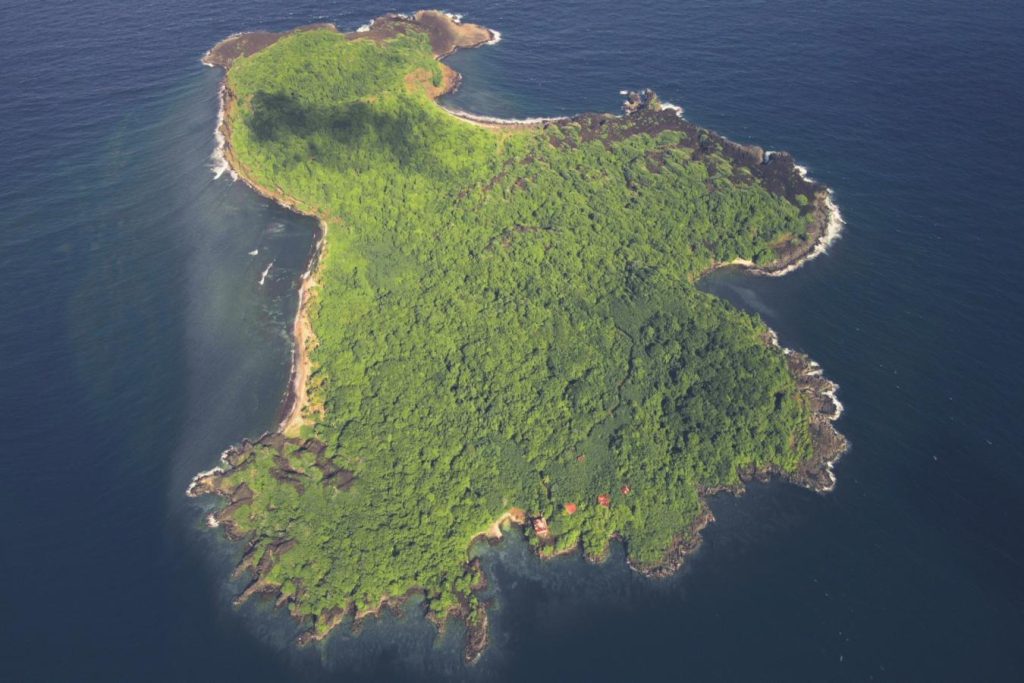
Ronde Island, the largest privately owned island in the Grenadines, has been on and off the market quietly since 2007. It is 2,000 acres in size, lightly inhabited, geologically distinctive, and one of the few remaining undeveloped large freehold islands in the eastern Caribbean. It is also positioned at the centre of one of the most acclaimed sailing regions on earth.
The island lies 5 miles north of Grenada, 15 miles south of Carriacou, and on the natural cruising line that connects Grenada to the Tobago Cays, Mustique, Bequia, and the other gems of the southern Grenadines. The Grenadines are currently under consideration for UNESCO World Heritage status across both Grenada and Saint Vincent jurisdictions, with the archipelago described in the nominating documentation as one of the most extensive coral reef habitats in the south-eastern Caribbean and one of the world's most popular sailing destinations.
This is the island at the heart of that archipelago.
The Land
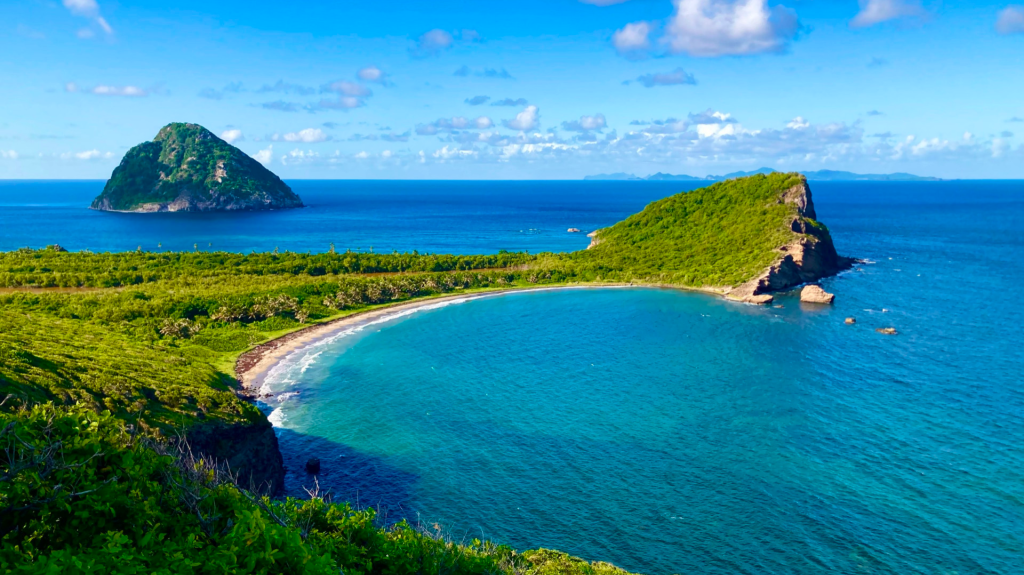
2,000 acres. Roughly 2.7 kilometres long by 1.5 kilometres wide. The terrain is the undulating Caribbean character that defined the island's earliest descriptions in 18th-century maritime charts: small hills rising to about 150 metres above sea level, narrow valleys, several sheltered bays, sandy beaches on the western flank, and rocky shorelines on the more exposed northern and eastern sides.
A swim-through sea cave at the island's edge is the property's most celebrated geological feature, a natural arch of black volcanic rock carved by centuries of Caribbean swell. The interior holds dry forest, scrub, cactus, and the kind of bird life that thrives where humans have largely stayed away: white and brown pelicans, frigates, herons, and migratory species using the island as a stopping point.
The island is presently uninhabited beyond a small caretaker presence and the seasonal use by Grenadian fishermen who anchor in the western bay during lobster season and other peak fishing periods, a traditional pattern that has continued for generations. Local fishermen maintain the only formal path on the island, a track running from the beach landing into the interior. This traditional use is part of the Grenadines maritime culture that any thoughtful future development would integrate rather than displace.
The island offers two primary development positions: ridge-top sites along the higher ground with 360-degree Caribbean views, or beachfront sites in the protected western bays with direct lagoon and reef access. The property is suitable for showcase villas or a boutique hotel, with scale appropriate for either model.
The Underwater Landscape
The waters around Ronde Island are some of the most ecologically rich and dramatically structured in the Caribbean. Visibility regularly exceeds 100 feet. The marine fauna inventory includes:
- Hawksbill and green sea turtles, both nesting and resident
- Large pelagic fish: tuna, wahoo, marlin, and barracuda along the deeper drops
- Green moray eels in the reef crevices
- Reef sharks in the channels
- Resident schools of jack, snapper, grouper, and parrotfish
The underwater topography is the kind that brings dive operators from across the Caribbean to the area: sunken cliffs and bottomless vertical walls along the offshore drop, coral-encrusted canyons, and an underwater cavern decorated with stalactites and quartz crystals that is among the most distinctive geological features divers can visit in the region.
The Sisters Rocks, a small group of pinnacles just west of Ronde, are widely regarded as one of the finest snorkelling and shallow-dive sites in the southern Grenadines.
Kick 'em Jenny
Eight kilometres west of Ronde Island lies Kick 'em Jenny, the only historically active submarine volcano in the Eastern Caribbean. Its summit is currently 180 metres below the sea surface, rising 1,300 metres from the seafloor. The volcano has erupted at least 14 times since 1939, most recently in April 2017, and is the most intensively monitored submarine geological feature in the Caribbean. A 1.5-kilometre maritime exclusion zone around the volcano summit is permanently in effect; a 5-kilometre exclusion zone is enforced during periods of heightened activity. Ronde Island lies well outside both zones.
A buyer considering Ronde Island should understand this geological context for two reasons. First, the entire Grenadines archipelago is volcanic in origin. The same forces that built the chain over the past three to four million years remain active in the region, and the visible character of the landscape (the offshore pinnacles of the Sisters, the dramatic underwater walls, the swim-through sea cave at Ronde) is the legible record of that history. Volcanism is not incidental to these islands; it is the source of their geological identity.
Second, the University of the West Indies Seismic Research Centre operates one of its permanent monitoring stations on Ronde Island itself, contributing real-time data to a regional warning system that has functioned reliably since 1939 and was significantly upgraded in 2025 with funding from the Caribbean Development Bank. Volcanic activity in the region is not visible or audible at the surface during most eruptions, and the science of detection and warning is more advanced here than at almost any comparable site in the world.
For a thoughtful buyer, the proximity to one of the world's most studied submarine volcanoes is either a feature of the position (active geology, unique marine life around the hydrothermal vents, ongoing scientific significance) or it is a fact to be incorporated into development planning. It is not a hidden risk. It is one of the reasons Ronde Island looks the way it does.
The Grenadines Position
Ronde Island sits in the middle of what is widely considered one of the world's three or four finest sailing regions, alongside the Mediterranean's Cote d'Azur and Croatia's Dalmatian coast and the British Virgin Islands. The trade winds are steady, the water is clear, the islands are close enough together for short hops and far enough apart to feel discovered, and the cultural tapestry across the archipelago, from Grenada's spice plantations to the Tobago Cays Marine Park to Mustique's villas to Bequia's boatbuilding tradition, gives every sail a different character.
Sailing distances from Ronde Island:
- Grenada main island: 5 miles, less than an hour by yacht
- Carriacou: 15 miles, the cultural heart of the southern Grenadines
- Tobago Cays: 27 miles, a UNESCO-tentative-listed marine reserve and the archipelago's headline snorkelling and beach destination
- Mustique: 47 miles, the famously private celebrity island
- St. Vincent: 68 miles, the regional cultural and trading anchor
- Barbados: 140 miles east, with direct international flights from London, New York, and the European hubs
This is the strategic position: Ronde is not a destination in isolation; it is the hub of an entire Caribbean cruising region.
Grenada and the Mainland
The main island of Grenada, five miles south, is among the most cultivated and historically rich of the Caribbean nations. Known as the Spice Isle for its nutmeg, cinnamon, clove, and cocoa plantations, with restored historic capital St. George's, the Port Louis International Luxury Yacht Marina, 45 beaches, the rainforests and waterfalls of Grand Etang National Park, and a cuisine and rum culture that has drawn the slow attention of international food writers over the past decade.
Maurice Bishop International Airport (GND), on Grenada's southern coast, receives direct flights from London (Gatwick and Heathrow), New York, Miami, Atlanta, Toronto, and Frankfurt. From the airport to a boat dock for the crossing to Ronde Island is approximately one hour by road.
Development Considerations
A 2,000-acre Caribbean private island of this scale is a once-per-generation type of asset, and the next chapter of Ronde Island will be defined by the position the next owner takes. Possible directions include:
A private estate. A compound house, a small villa for staff and guests, a private marina in the western bay, and the rest of the 2,000 acres left as a private nature reserve. The island is large enough that a complete personal residence occupies a tiny fraction of the land.
A boutique hotel or private island resort. Several ridge-top and beachfront sites can carry a low-density luxury hotel of 20 to 30 villas, in the style of Mustique's Cotton House or Petit St. Vincent's resort, without disturbing the character of the wider island.
A conservation-aligned development. Given the UNESCO World Heritage candidacy of the wider Grenadines archipelago, an environmentally led development with formal conservation partnerships could position the property as the flagship private island in the eastern Caribbean's most-watched marine region. The continuation of traditional fishing access in the western bay, formalised through a community access agreement, could be part of such a position rather than an obstacle to it.
Mixed use. The scale of the island is such that all three positions can coexist on different parts of the property.
Standard due diligence for a transaction of this scale should include verification of the freehold title chain, confirmation of any traditional or customary use rights, an environmental and marine impact assessment for any proposed development, and a survey of the seismic monitoring station's lease arrangement with the University of the West Indies. Grenada's property law is straightforward for international buyers and welcomes direct freehold purchase, with Grenadian citizenship-by-investment available under the country's CIP programme as an additional option for qualifying foreign nationals.
Access
- From Grenada main island: approximately 5 miles by boat, less than 30 minutes by speedboat from St. George's or one of the northern Grenadian ports
- From Maurice Bishop International Airport: approximately one hour by car plus boat transfer
- By private aircraft: Maurice Bishop accommodates private jets to mid-size; helicopter transfer to the island can be arranged
- By private yacht: the western bay anchors comfortably up to 20 vessels and is one of the standard stops on the Grenada-to-Tobago-Cays cruising route
The Position
The southern Caribbean's largest privately held private island, in the middle of one of the world's premier sailing archipelagos, at the geological centre of an active volcanic region whose character is written into every visible feature of the property. Ronde Island has been on the market sporadically for nearly two decades because there are very few buyers in the world for an asset of this scale and very few sellers willing to part with one. For the buyer who is both, this is the position.
Everything You Need To Know
Grenada
Detailed jurisdiction data for Grenada coming soon. Browse our buying guides for general information.